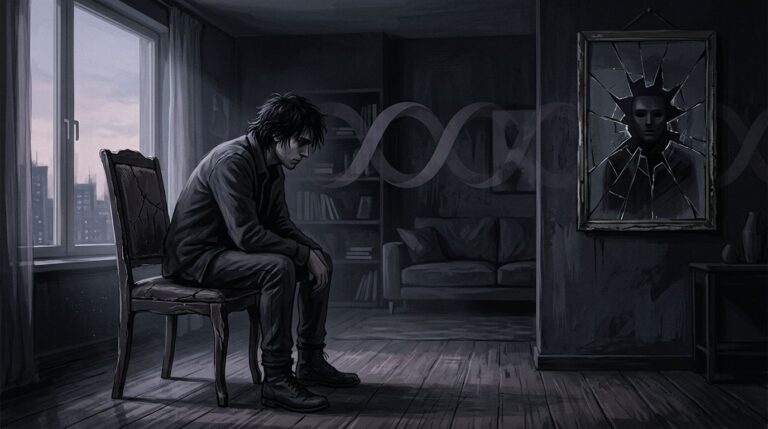
Sometimes eye contact does not feel small. It feels like pressure, exposure, or danger.
If you have lived through complex trauma, a direct look can stir up something old in your body before your mind has time to explain it. That can happen with strangers, partners, bosses, therapists, or kind people who have done nothing wrong.
When eye contact feels unsafe after navigating emotional abuse, the issue usually is not confidence or manners. It is how your nervous system learned to perceive being seen, and acknowledging this connection between your nervous system and your history is the first step toward healing.
Key Takeaways
- Trauma-informed perspectives: Difficulty with eye contact after emotional abuse is often a physiological survival response rather than a social failure or lack of confidence.
- The nervous system’s role: Your body may use an old safety rule—where being watched preceded criticism or harm—to trigger hypervigilance or a freeze response when someone makes direct eye contact.
- Distinction from other causes: While trauma impacts eye contact, struggles can also stem from neurodivergence, social anxiety, or cultural norms, each requiring a different approach to comfort and safety.
- Building safety through choice: You do not need to force steady eye contact to heal; instead, focus on small, manageable steps like sitting at an angle or using a soft focus to gradually signal safety to your nervous system.
When eye contact became a warning sign
Eye contact is not only about eyes. It can mean attention, closeness, evaluation, and power.
In a healthy moment, that can feel connecting. In an abusive dynamic, it can feel like a spotlight. A stare might have come right before criticism, contempt, interrogation, or the demand to explain yourself in exactly the right way. This type of abusive behavior often turned a simple gaze into a tool for intimidation.
For some survivors, especially after relationships shaped by narcissism, eye contact became part of a cycle of power and control. You may have been watched for the wrong facial expression. You may have learned to study someone else’s face for tiny changes in mood. Or perhaps you started avoiding eye contact to escape intense scrutiny or the confusing reality of gaslighting, where looking away brought accusations while looking directly invited more pressure. There was no safe option.
That is one reason the topic of eye contact and emotional abuse hits so hard for many people. Being seen once came with a cost.
Research supports this pattern. A study on direct eye contact in PTSD related to interpersonal trauma found that direct gaze can register as more threatening for people with trauma histories tied to relationships. Not every survivor reacts the same way, of course. Still, the basic message matters: your response can make sense even when it feels confusing.
Your body is not being dramatic. It is using an old safety rule that once made sense.

The same look that feels casual to someone else may feel like being pinned in place. Not because you are weak, and not because you are rude. Your system remembers patterns faster than words.
Why your body reacts before your mind catches up
Sometimes a person’s gaze lands like a hand on the alarm button. Your chest tightens, your smile becomes automatic, and you lose your train of thought. You feel an urgent need to look down, explain yourself, or get out of the room.
These experiences are common examples of nervous system dysregulation. Your body learned that faces had to be scanned for danger, and because eyes carry so much social meaning, eye contact became a central part of that scan. When you have a history of early childhood trauma, these protective responses can become deeply ingrained in your physiology.
This is also why your reaction can feel irrational. Your thinking mind may know that you are safe, but your body is still broadcasting a survival alert. These physical shifts are often recognized as C-PTSD signs, where your internal system is still trying to manage threats from the past.
For some, eye contact triggers hypervigilance. You might find yourself tracking every blink, eyebrow shift, or pause in conversation. For others, the response manifests as a freeze state or dissociation, where you suddenly feel like you are drifting away or unable to find your words. Some people fawn, which can look like intense politeness, quick agreement, or smiling while internally overwhelmed.
If a certain look suddenly makes you feel ashamed, young, trapped, or smaller than you are, you may be experiencing an emotional flashback triggered by past abusive behavior. If that sounds familiar, this guide on how to manage emotional flashbacks may help you put words to the experience.
None of this constitutes a formal diagnosis, but it does highlight how relationship abuse can train the nervous system to treat visibility as a risk. Eye contact is rarely just eye contact when your body is still processing the impact of past harm.
Not every eye contact struggle means trauma
Eye contact difficulty is rarely caused by a single factor. While trauma can certainly be a major influence, it is not the only reason you might find it hard to maintain a gaze.
Some people struggle with eye contact because of social anxiety. In these cases, the fear is often rooted in concerns about judgment, embarrassment, or saying the wrong thing. This is distinct from the threat-based responses seen in trauma. Conversely, many neurodivergent people navigate the world differently; for them, avoiding eye contact is a functional choice. Many autistic individuals find direct gaze distracting, intense, or sensory-heavy. Looking away is often a necessary tool for emotional regulation, helping them process information and manage interpersonal skills more effectively while staying regulated during a conversation.

Photo by terence b
Culture plays a significant role as well. In many families and communities, prolonged eye contact is considered impolite or even confrontational. Furthermore, early life experiences are foundational. If you grew up experiencing childhood emotional abuse or were raised by toxic parents, your attachment style may have been shaped to view others as potential sources of danger. History, sensory needs, and cultural context all contribute to how we relate to others.
Trauma adds a unique layer because it carries threat memory. The body links being looked at with being judged, trapped, exposed, or about to be hurt. That response can overlap with anxiety or neurodivergence, but it remains a distinct experience.
If your relationship with eye contact shifted after a period of emotional abuse, that change is significant. If it has always felt difficult, your personal story may include elements of social anxiety, sensory differences, or earlier trauma. Trauma-focused educators often describe this connection, including Tim Fletcher’s overview of complex trauma and eye contact.
You do not have to force steady eye contact to prove you are healing. The goal is not to look normal, but to feel safer, more present, and more empowered to make your own choices.
Small ways to rebuild safety with eye contact
The starting point is simple, even if it does not feel simple at all: choice helps, but pressure usually does not. Rebuilding safety is a process, and viewing this as a long-term healing journey can take the pressure off your nervous system.
You do not need to jump straight into long, direct eye contact. In recovery, small steps work best. Your nervous system usually responds when it gets repeated experiences of knowing you can pause, look away, and feel that nothing bad happens.
A few gentle options can help you navigate social interactions:
- Try a soft focus instead of a direct gaze. Looking at someone’s forehead, cheek, or the space beside them can feel easier.
- Sit at an angle rather than face-to-face. Side-by-side conversation, walking together, or talking in the car can reduce pressure.
- Use short rounds. One or two seconds of eye contact, then a break, can be enough for now.
- Ground first. Press your feet into the floor, hold a mug, lengthen your exhale, or notice five things you can see.
- Validate your need for distance. Remember that avoiding eye contact is a temporary safety tool, and you can name your preference out loud by saying, “I listen better when I do not look the whole time.”
- Stop before you hit shutdown. Building tolerance below your limit is kinder and more effective. By accepting that avoiding eye contact is okay during moments of high stress, you give your body permission to regulate.
Consent matters here too. In therapy, dating, friendship, and family conversations, eye contact should not be demanded as proof of honesty, respect, or love. A trauma-informed therapist will work with your body rather than against it. You can ask to sit slightly turned, hold something in your hands, or look at a point on the wall while talking.
If your body is stuck in constant face-scanning, healing from hypervigilance after abuse can support this part of the process.
Real relationship healing is not about performing comfort. It is about having more options and more safety while you connect.
What safe relationships and therapy often do differently
Safe people do not use eye contact as a lie detector. They do not demand that you look at them when they are talking as a way to control the moment, and they do not confuse your internal overwhelm with a lack of respect.
That difference can feel strange at first. After experiencing complex trauma, genuine gentleness may not feel gentle right away. It may feel suspicious because your body is waiting for the hidden cost. For many, the feeling of being watched by others can trigger a deep sense of chronic shame that feels impossible to shake. That does not mean the current situation is unsafe; it simply means your nervous system is learning a new, healthier pattern at its own pace.
Eye contact should feel like an invitation, not a test.
In safer relationships, connection can happen in many ways. It exists through a calm tone of voice, a quiet pause, or simply sitting nearby. It happens through texting when words are difficult, or through shared tasks, walking, and a hand squeeze you agreed to first. Direct gaze is only one form of connection, not the only one that counts.
This matters in professional settings, too. A skilled mental health professional can help you navigate these feelings by creating a space that prioritizes your pacing, consent, and autonomy. Certain modalities are particularly effective here. Somatic therapy can help you notice when your body starts bracing, while cognitive behavioral therapy can assist in reframing the thoughts that arise when you feel scrutinized. In these spaces, you are allowed to look out the window or ask to slow down whenever you need to.
Over time, those moments add up. They do not necessarily lead to perfect eye contact on a fixed timeline, but they lead to something better: more choice, less fear, and a growing sense that being seen does not always end in harm.
Frequently Asked Questions
Why does my body react to eye contact if I know I am safe?
Your thinking mind understands you are in a safe environment, but your nervous system is still operating on survival patterns learned during past abuse. Because your body remembers the threat faster than your brain can process the current reality, it triggers a defensive response like tightening, dissociation, or the urge to look away.
Is it normal to feel like I am being ‘watched’ even when I am alone?
This is a common experience known as hypervigilance, which is often a lasting effect of being under constant scrutiny in an abusive relationship. Your system has been trained to scan for danger and potential mood shifts in others, and it may continue to scan the environment for those same threats out of habit.
How can I make social interactions feel less draining?
Try shifting your focus to external tasks or side-by-side activities, such as walking, driving, or working on a project together, which naturally reduces the pressure of direct eye contact. You can also communicate your needs by mentioning that you listen more effectively when you do not have to hold a steady gaze the entire time.
Should I try to push myself to maintain eye contact to ‘get over’ the fear?
Pushing through your discomfort often signals to your nervous system that you are being forced, which can actually increase your feelings of anxiety or lead to a shutdown. True healing happens by honoring your boundaries and creating small, consensual experiences where you feel empowered to look away whenever you need to.
The part to hold onto
If you find yourself avoiding eye contact after experiencing emotional abuse, please remember that you are not failing at social connection. This behavior is a common self-preservation strategy and a defense mechanism your body developed to protect you during difficult times. It is important to distinguish this protective withdrawal from a catatonic stare, as the former is an active attempt to stay safe while the latter often signals a deeper state of detachment.
Whether your struggles stem from adult relationships or childhood emotional abuse, your nervous system is simply operating on an old rule that once helped you survive. Recovery does not ask you to force a stare or push past your limits. Instead, it asks for gentleness, pacing, consent, and the accumulation of safer experiences that teach your nervous system something new.
If you are currently in an unsafe situation, please consider reaching out to a domestic violence advocate who can provide resources and support. Being seen should not feel like danger forever; with time and patience, it can start to feel like a choice.