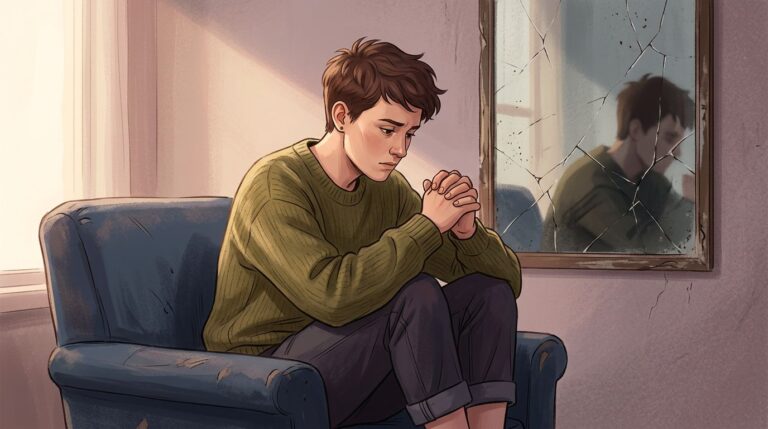
Missing an ex can feel like withdrawal. One minute you’re sure the breakup was right, the next you’re staring at your phone like it’s going to save you.
If your relationship was intense, on-and-off, or full of apologies and “fresh starts,” it’s normal to wonder: is this trauma bond vs love, or am I just grieving a real connection?
This article is educational, not medical advice. If you feel unsafe or are in immediate danger, contact local emergency services. In the US, you can call or text 988 for urgent mental health support, and consider checking local equivalents in your country.
Trauma bond vs real love, what’s the core difference?
A trauma bond is an attachment that can form when a relationship swings between pain and relief. After conflict, coldness, or even emotional abuse, any small kindness can land like a life raft. Your nervous system learns to chase the “good” moments because they feel like oxygen.
Real love can be intense too, but it doesn’t require you to suffer to earn closeness. It supports your dignity and your sense of self, even during conflict.
If you want a deeper explainer from a relationship safety perspective, Identifying & Overcoming Trauma Bonds is a solid starting point.
Why you miss them so much, even if it hurt
Missing someone after relationship abuse doesn’t mean you’re “weak” or “too much.” It can mean your brain got trained to link love with relief.
Some common drivers:
- Intermittent reinforcement: Unpredictable affection can hook you harder than steady care.
- Self-doubt cycles: If you were blamed, minimized, or guilt-tripped, you may still feel responsible for “fixing it.”
- Body memory: Your chest tightens, your stomach drops, you crave contact. That’s not romance, it’s stress chemistry.
If your mental health already runs intense, like mood swings or deep guilt, breakups can hit extra hard. This piece on understanding bipolar depression and guilt can help you separate heartbreak pain from self-blame spirals.
When you miss your ex, look at what you’re actually craving
Try this quick check: when you imagine going back, do you picture who they are now, or do you picture the relief of not hurting today?
Signs missing them may be trauma-bond pain
You may notice:
- You miss them most after feeling rejected, lonely, or triggered.
- Your memories play like a highlight reel, and your body forgets the bad parts.
- You feel panic at the idea they’ll move on, even if you didn’t feel safe with them.
- You’re tempted to “prove” your worth to them.
- Conflict felt like a fog, and makeups felt like a high.
This can show up in relationships affected by control, manipulation, or patterns sometimes linked with narcissism (without trying to label anyone). If you’re curious about common stages and signs, Trauma Bonding: Signs, Stages and Recovery offers a clear overview.
Signs it may be real love and healthy grief
Healthy love usually leaves behind sadness, not obsession. You may notice:
- You miss them, but you still feel like yourself.
- You can name specific, consistent qualities you valued (kindness, reliability, teamwork).
- You don’t feel scared to speak up or set boundaries.
- The relationship didn’t require you to shrink, chase, or “earn” basic respect.
A quick comparison you can screenshot
| Pattern | Trauma bond | Real love |
|---|---|---|
| Emotional tone | Anxiety, urgency, “I need this now” | Steady warmth, “I can breathe” |
| Conflict | Cycles of rupture and dramatic repair | Repair includes accountability and change |
| Your sense of self | Smaller, confused, walking on eggshells | Clearer, more confident, grounded |
| Contact after breakup | Feels like withdrawal | Feels like grief that slowly softens |
| Future thinking | “Maybe this time they’ll finally…” | “We can solve problems together” |
A relationship reality-check checklist (use it honestly)
Ask yourself yes or no:
- Do I feel emotionally safe disagreeing with them?
- Do they respect my “no” without punishment?
- Do I often feel responsible for their mood?
- Did I experience name-calling, threats, humiliation, or monitoring (common in emotional abuse)?
- Are apologies followed by real behavior change, not just promises?
- Do I feel more peaceful away from them?
If you answered “yes” to safety and respect, it may be grief. If you answered “yes” to fear, punishment, or control, it may be bonding to the cycle.
Journaling prompts that separate love from the hook
Set a timer for 10 minutes. Write fast, no censoring.
- “When I miss them, I’m usually feeling…” (lonely, rejected, bored, unsafe, ashamed)
- “The part of the relationship I’m addicted to is…” (attention, chemistry, apologies, being chosen)
- “I felt most myself when…” (with them, away from them, with friends, alone)
- “If a friend told me this story, I’d say…”
- “A healthy relationship would look like…” (daily behavior, not big speeches)
This kind of clarity is a strong start for recovery and long-term relationship healing.
Grounding techniques for the urge to text them
When the craving spikes, you don’t need perfect willpower. You need a nervous system reset.
- 5-4-3-2-1: Name 5 things you see, 4 you feel, 3 you hear, 2 you smell, 1 you taste.
- Cold water reset: Splash cold water on your face or hold an ice cube for 30 seconds.
- Feet on the floor: Press your heels down and slowly exhale longer than you inhale.
If you want more structured exercises, Overcoming Trauma Bonding: 8 Strategies & Exercises has practical ideas.
Boundary scripts that don’t invite a debate
Keep it short. You’re not writing a closing argument.
- “I’m not available for contact. Please don’t message me again.”
- “I’m focusing on healing. I won’t meet up.”
- “I’ll respond about logistics only, by email.”
- “If you raise your voice or insult me, I’ll end the call.”
If you’re dealing with repeated boundary-pushing, that’s information. It often matters more than the apology.
A no-contact plan that’s realistic (and kinder to you)
No-contact isn’t punishment. It’s space for your brain to stop associating them with relief.
- Pick a start date (today counts).
- Remove easy access: mute, unfollow, block if needed, delete old threads, hide photos.
- Write a “craving list”: three people to text, two places to go, one grounding tool.
- Set a slip plan: If you contact them, you don’t spiral. You reset and return to the plan.
- Track the pattern: Note what triggered the urge (time of day, alcohol, social media, loneliness).
Modified no-contact for co-parenting or shared logistics
If you share kids, housing, pets, or finances, full no-contact may not be possible. You can still reduce harm.
- Use one channel: email or a co-parenting app.
- Limit topics: kid schedule, health, school, money due dates. Nothing personal.
- Use a time window: “I check messages at 6 pm.”
- Grey rock style: brief, polite, no emotional hooks.
- Safety first: If you fear escalation, consider getting support from a lawyer, advocate, or local domestic violence service.
Digital triggers: social media stalking keeps the bond alive
Checking their stories can feel like “just seeing,” but your body reads it like contact.
Try a 7-day digital reset:
- Remove them and mutual “spy accounts.”
- Turn off memory notifications and “On This Day.”
- Put social apps in a folder, or log out after 10 minutes.
- When you want to check, write: “What do I hope to feel?” Then use a grounding tool instead.
Support and resources when it feels bigger than you
You don’t have to carry this alone. If you’re trying to make sense of a confusing or unsafe relationship, The Hotline’s trauma bond resource can help you name patterns and find support options.
If you feel at risk of harming yourself or you can’t stay safe, contact local emergency services. In the US, you can call or text 988. If you’re outside the US, look up your local crisis line or emergency number.
Conclusion: missing them isn’t proof it was love
You can miss someone and still know the relationship wasn’t good for you. Longing is not a verdict, it’s a signal that your body remembers intensity.
The goal isn’t to “stop caring” overnight. It’s to choose relationship healing one day at a time, with boundaries that protect your peace.
If you’re stuck, start small: one grounding exercise, one honest journal entry, one day of less contact. That’s how recovery begins.