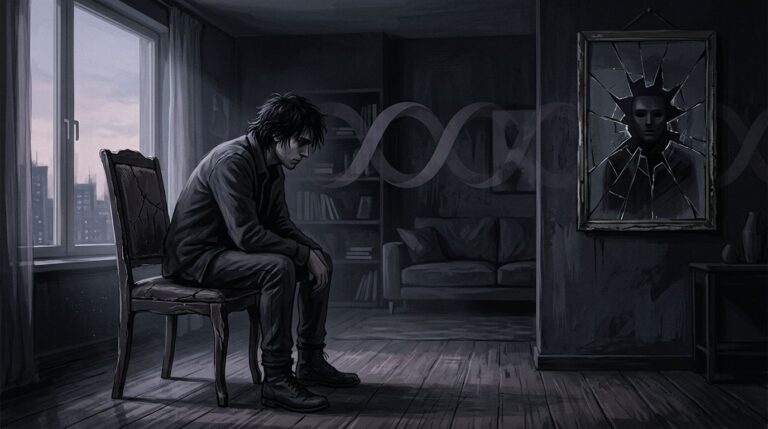
The silence after you leave can feel loud. Not because you miss them, but because your brain starts replaying scenes like a highlight reel, cutting out the worst parts and keeping the “good” moments on loop.
Then the thought lands: maybe it wasn’t that bad.
If you were gaslit, that spiral isn’t random. It’s a leftover effect of someone training you to doubt your own memory, needs, and instincts. This post offers a practical, gentle reality check gaslighting toolkit so you can steady yourself when doubt shows up.
Quick note: This is educational, not medical or legal advice. Trauma can affect memory and recall, sometimes making events feel fuzzy or out of order. That doesn’t mean your experience wasn’t real.
Why the “maybe it wasn’t that bad” spiral hits after emotional abuse
Gaslighting is a form of emotional abuse. Over time, it can teach you to treat your own perception like “suspect evidence.”
After you leave, three things often collide:
1) Your nervous system wants relief.
Your body may crave calm so much that your mind tries to smooth the past, like sanding down sharp edges.
2) Your brain prefers a simple story.
“Maybe it wasn’t abuse” feels less painful than “I loved someone who harmed me.” Minimizing can feel like control.
3) You’re remembering in snapshots, not patterns.
A single kind moment can look huge when it’s not sitting next to the week of tension that came before it.
If you want a clear overview of what gaslighting looks like and why it works, this guide is a solid grounding read: Seeing Through Gaslighting: A Reality Check.
A grounded definition: what gaslighting does to your “inner witness”
Here’s a simple way to think about it: gaslighting attacks your inner witness, the part of you that says, “I know what I saw. I know what I felt.”
In relationship abuse, that inner witness gets worn down through repeated moments like:
- “You’re too sensitive.”
- “That never happened.”
- “You’re twisting my words.”
- “Everyone agrees you’re overreacting.”
Over time, you may start gaslighting yourself, even after the relationship ends. If that’s happening, this Psychology Today piece can help you put language to it: 7 Tips to Un-Gaslight Yourself After Domestic Abuse.
Red flags that you’re minimizing relationship abuse (without realizing it)
The “maybe” spiral often sounds reasonable. That’s what makes it so sticky. Watch for these common tells:
- You argue against your own pain. “It wasn’t that bad, other people have it worse.”
- You focus on intent, not impact. “They didn’t mean to,” even though you were harmed.
- You overvalue rare kindness. One apology starts to outweigh months of fear.
- You rewrite your boundaries as flaws. “I’m too needy,” instead of “I needed respect.”
- You carry all the responsibility. “If I’d communicated better…” becomes the whole story.
- You confuse intensity with love. High highs don’t cancel out harm.
This can get even more tangled when the dynamic included coercion, blame-shifting, or traits often linked with narcissism (without trying to diagnose anyone). The common thread is still the same: your reality was repeatedly questioned.
The 10-minute “Evidence Audit” (a fast reality-check gaslighting exercise)
When your brain says, “Maybe I made it up,” don’t debate it for hours. Do a short audit like you’re reviewing a case file, not your worth.
Set a timer for 10 minutes, grab notes, and answer:
1) What happened, in plain facts?
Write 3 to 5 concrete examples (dates help, but aren’t required).
2) What did it cost you?
Sleep, friendships, health, work focus, confidence, money, joy.
3) What did you change to keep peace?
Words you stopped saying, places you stopped going, people you avoided.
4) What did you feel right before you “gave in”?
Tension, dread, confusion, walking on eggshells, numbness.
5) What was the pattern after conflict?
Denial, blame, love-bombing, silent treatment, threats, “jokes,” apologies with no change.
6) If a friend told you this story, what would you call it?
Use clear words: disrespect, manipulation, control, relationship abuse.
If guilt starts flooding in during this exercise, you might relate to how shame and self-blame can spiral in other mental health struggles too. This Living Numb post can be a supportive companion: Navigating the Depths of Depression and Guilt in Bipolar Disorder.
The “Pattern Lens” worksheet (zoom out from moments to months)
Gaslighting thrives when you look at a single moment in isolation. The pattern lens pulls you back to the wide angle.
On paper, draw three columns and fill them in:
Column 1: Trigger
What set it off (a boundary, a question, you being tired, you saying no).
Column 2: Their response
Deflection, denial, rage, mockery, charm, punishments, “You’re crazy,” “You’re the abusive one.”
Column 3: Your outcome
You apologized, you doubted yourself, you went quiet, you worked harder, you felt smaller.
Now answer these three prompts:
- Frequency: How often did this cycle happen, weekly or monthly?
- Escalation: Did it get worse when you became more independent?
- Repair: Were there real changes, or only resets?
This worksheet helps your brain stop treating each incident like a one-off “misunderstanding.”
Inner-dialogue reframes that stop the loop (examples you can borrow)
When the spiral hits, you don’t need a perfect mantra. You need a sentence that pulls you back to reality.
Try these, out loud if you can:
Reframe 1 (facts over fog):
“I don’t need perfect memory to trust the pattern.”
Reframe 2 (impact matters):
“Even if they had reasons, I still got hurt. That counts.”
Reframe 3 (kindness isn’t proof):
“A nice day doesn’t erase the days I felt afraid.”
Reframe 4 (boundaries aren’t cruelty):
“I’m allowed to protect my peace, even if they disagree.”
This is part of recovery, not weakness. You’re rebuilding your inner witness.
Boundaries and safety planning that protect your new reality
Reality-checking works best when your life isn’t being re-scrambled in real time.
If it’s safe for you, consider:
- No-contact when possible (block, mute, filter emails).
- Limited-contact when you must (kids, shared logistics), with short, boring replies and written records.
- One safe person you can text after a destabilizing message, so you don’t get pulled back into self-doubt.
- A “don’t answer right now” rule (24 hours before responding to anything emotional).
If you feel at risk or need help thinking through a plan, support exists. In the US, you can reach the National Domestic Violence Hotline. If you’re outside the US, seek your local equivalent domestic violence service in your country and language.
Conclusion: your clarity is allowed to take up space
The “maybe it wasn’t that bad” spiral is a symptom of what you lived through, not proof you imagined it. Gaslighting trained you to second-guess, and relationship healing trains you to trust yourself again.
Keep your evidence audit. Use the pattern lens. Borrow the reframes until they feel like yours.
Your reality doesn’t need their permission.