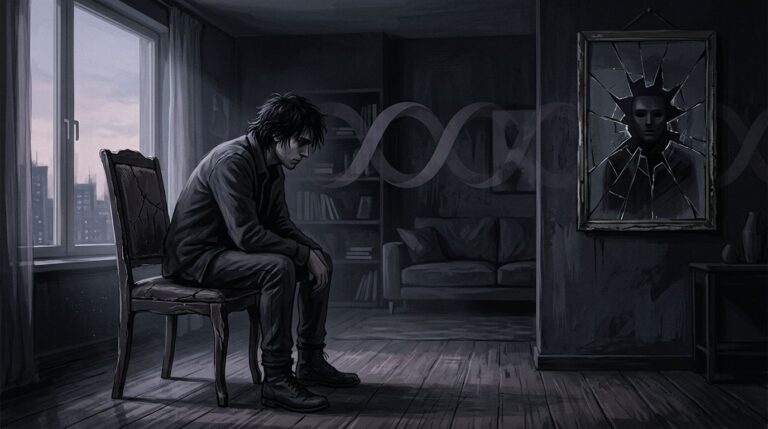
Many people leave a toxic relationship feeling confused, emotionally drained, or unlike themselves, even if they can’t quite explain why. From the outside, the relationship may have looked functional, intense, or even loving. On the inside, something felt off. For many, that lingering confusion leads to questions like:
- Why do I feel so emotionally numb now?
- Was this actually unhealthy, or am I overreacting?
- Why can’t I seem to let go, even though I was hurt?
This article explores narcissistic abuse as a pattern of behavior and its emotional impact, including anxiety and depression, not as a diagnosis, and not as a label you need to apply to anyone. Understanding these patterns can help bring clarity, language, and self-trust back into focus.
If you are early in this process, you may already be noticing the emotional impact before fully understanding the pattern itself. Many people first recognize this experience through emotional shutdown or disconnection, which we explore further in the Numb section of the site.
What Is Narcissistic Abuse?
Narcissistic abuse refers to ongoing patterns of psychological abuse through emotional manipulation, control, and invalidation that occur within a relationship. These patterns often center around power imbalances and a lack of emotional accountability.
Rather than focusing on whether someone “is” a narcissist or has Narcissistic Personality Disorder, it’s more useful to look at what the relationship consistently feels like and how it affects you over time.
These dynamics can occur in:
- romantic relationships
- families
- friendships
- workplaces
What defines narcissistic abuse is not a single incident in a toxic relationship, but repeated behaviors that erode self-trust, clarity, and emotional safety.
Common Patterns of Narcissistic and Emotional Abuse
People who experience narcissistic or emotional abuse dynamics often describe similar patterns, even when the relationships themselves look very different.
Some of the most common patterns include manipulative behaviors such as:
Gaslighting and Reality Distortion
Being told that your perceptions are wrong, exaggerated, or imagined. Over time, this can cause deep self-doubt and confusion.
Chronic Criticism or Devaluation
Subtle or overt comments that undermine your confidence, worth, or competence, often alternating with praise or affection.
Emotional Inconsistency
Periods of love-bombing, warmth, attention, or closeness followed by withdrawal, the silent treatment, or coldness, creating emotional instability and leaving you feeling like you’re walking on eggshells.
Lack of Accountability
An inability or unwillingness to take responsibility for harm, often shifting blame or minimizing your experience; this stems from a profound lack of empathy.
Control Disguised as Concern
Rules, monitoring, or pressure framed as “help,” “love,” or “protection,” rather than mutual respect.
You can explore deeper explanations of these behaviors and how they function relationally in the Understanding Emotional Abuse section of the site.
The Emotional Impact: Why It Affects You the Way It Does
One of the most confusing aspects of narcissistic abuse is how deeply it affects emotional well-being, often long before the person recognizes what’s happening.
Common emotional responses include:
- persistent confusion or self-doubt
- emotional numbness or shutdown
- hyper-focus on the other person’s needs or moods
- difficulty trusting your own perceptions
- feeling disconnected from your sense of self
These reactions are not signs of weakness. They are common responses to prolonged emotional invalidation, devaluation, and instability, patterns that fall under domestic violence.
Many people recognize this phase as emotional shutdown, a state where feeling less becomes a way of coping. Symptoms like hyper-focus and disconnection from your sense of self can signal PTSD symptoms, while persistent confusion or shutdown often manifests as anxiety and depression. Low self-esteem is another frequent outcome of this prolonged devaluation. This experience is explored further in the Numb category.
When Clarity Arrives — and It Hurts
For many, there is a moment, or a slow realization, when clarity begins to form following the Idealization Phase, Devaluation Phase, and Discarding Phase of the relationship cycle. Understanding that the relationship was unhealthy can feel validating, but it can also make things harder before they get easier.
This phase often includes:
- grief for what you hoped the relationship would be, often accompanied by low self-esteem
- anger or resentment that surfaces after long suppression
- obsessive thinking or rumination
- trauma bonding, a strong attachment despite knowing the relationship was harmful
This emotional fallout is common and deeply human. Recognizing harmful patterns doesn’t immediately dissolve emotional bonds, especially when those bonds were reinforced through inconsistency and emotional highs and lows.
Is This Really Abuse — or Am I Overreacting?
This question comes up again and again, and it’s an important one.
Many people hesitate to use the word “abuse” because:
- the relationship wasn’t always bad
- there was no physical violence or financial abuse
- the other person also had trauma or stress
- there were genuine moments of connection
Emotional abuse, including coercive control, often exists alongside care, intensity, or shared history. Harmful patterns that fall under domestic violence don’t disappear because good moments existed.
Rather than asking whether something “counts,” it can be more helpful to ask:
- Did this relationship consistently make me feel smaller, confused, or unsafe emotionally?
- Did I have to abandon parts of myself to keep the connection?
Those questions often bring more clarity than labels. Consulting a mental health professional can help you navigate that clarity further.
Moving Toward Recovery and Self-Trust
The recovery process from narcissistic or emotionally abusive relationships is not about fixing the past or achieving perfect closure. It is about rebuilding clarity, self-worth, boundaries, and self-trust over time.
For many people, recovery includes:
- learning to trust their perceptions again
- understanding healthier relational patterns
- set healthy boundaries
- healing from trauma by reconnecting with identity and values
- moving forward without minimizing what happened
- joining a support group
This phase often feels quieter and less dramatic than the earlier ones, but it is no less meaningful. Articles focused on this process can be found in The Upswing, where healing is framed realistically rather than optimistically.
What This Article Is — and Isn’t
This article is intended to be educational and reflective on psychological abuse, not diagnostic or prescriptive.
It is not:
- a clinical diagnosis of Narcissistic Personality Disorder
- a replacement for therapy
- a requirement to label anyone
You do not need a diagnosis (of yourself or someone else) to validate your experience. Patterns and impact matter.
Where to Go Next
If parts of this article resonated, you may find it helpful to explore the section that best reflects where you are now:
- Feeling emotionally disconnected or numb, dealing with hoovering → Numb
- In the painful clarity or emotional fallout stage, navigating smear campaigns → The Pit
- Rebuilding boundaries and self-trust → The Upswing
- Wanting deeper foundational understanding of emotional abuse → Understanding Emotional Abuse
Closing Thoughts
Understanding narcissistic abuse doesn’t change what happened, but it often changes how people carry it forward.
Language creates clarity.
Clarity restores sense of self.
And for many, that is where healing from narcissistic abuse truly begins.