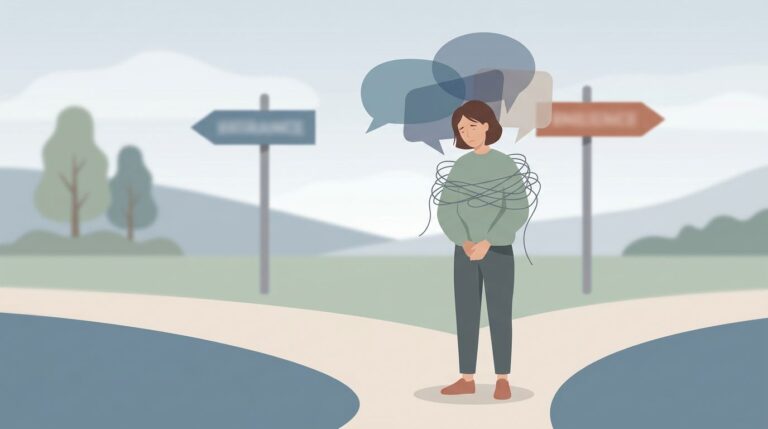
You might expect tears after pain. So when they don’t come, it can feel scary, confusing, even shameful.
If you’ve been through emotional abuse and feel numb instead of tearful, that does not mean you’re cold, broken, or “over it.” It often means your body learned how to survive. And survival doesn’t always look emotional on the outside.
Let’s make sense of why crying can shut off after abuse, and what can help that frozen place start to soften.
When tears don’t come, your body may be protecting you
A lot of people think crying is proof that they feel something. But trauma doesn’t work like that.
After ongoing relationship abuse, your nervous system may shift into protection mode. Instead of releasing emotion, it may shut emotion down. Not forever, not as a personality trait, but as a response to stress that lasted too long.
That response can look like emotional abuse numbness. You know something hurt. You know it mattered. But your face stays blank. Your chest feels tight. Your thoughts go quiet. Or you feel nothing at all.
Not crying after abuse doesn’t mean you have no feelings. It can mean your system learned that feeling wasn’t safe.
This is common after chronic criticism, gaslighting, intimidation, silent treatment, emotional withdrawal, or being punished for having needs. When tears were mocked, ignored, or used against you, your mind and body may have learned, “Don’t go there.”
So they don’t.
That can be hard to accept, because numbness feels like absence. But numbness is often a form of protection. It’s the emotional equivalent of your body pulling its hand away from heat.
If you’re still trying to put language to what happened, what emotional abuse looks like can help clarify patterns that are easy to minimize after the fact.
Not crying can also bring up a second layer of pain. You may think, “Why can’t I even do this normal human thing?” Then shame piles on top of grief. That shame deserves gentle attention too.
You are not failing at healing because the tears haven’t shown up.
What emotional abuse does to the nervous system
Emotional pain is not “all in your head.” It lives in the body too.
When someone keeps you on edge, dismisses your feelings, twists reality, or turns closeness into a threat, your nervous system starts adapting. It becomes less focused on expression and more focused on getting through the next moment.

You might go into fight, flight, freeze, or fawn. Many survivors of emotional abuse spend a lot of time in freeze. Freeze can feel like going blank, feeling heavy, losing words, or becoming emotionally flat. It isn’t weakness. It’s an old survival setting.
Crying often needs safety first
Crying is a release. Release usually needs some sense of safety.
If your body still feels watched, judged, or braced for impact, it may not let go yet. That’s true even if the relationship has ended. Your thinking brain may know you’re out, while your body still acts like danger is near.
This is one reason people can cry over a movie but not over their own past. The movie feels distant enough. Your own story still feels loaded.
Some survivors also grew up with the message that emotions were “too much.” If there was childhood invalidation, then later relationship abuse may have pressed on an older wound. The result is not only sadness, but shutdown.
For some, this pattern is tangled up with narcissism. If the person who hurt you needed control, admiration, or constant emotional power, your feelings may have been treated like a problem. Over time, your inner world can go underground.
If this sounds familiar, signs of an emotional shutdown response may help you recognize what your body has been doing for you, not against you.
Why the numbness can show up after the relationship ends
This part often surprises people. They leave, and instead of falling apart, they feel… nothing.
That delayed response makes sense.
During abuse, your body may have stayed in emergency mode. There often isn’t room to process while you’re trying to predict moods, avoid conflict, keep the peace, or survive daily confusion. The feelings get stored, muted, or pushed aside.
Then the relationship ends, and you expect relief to bring tears. Sometimes it does. Sometimes the body stays frozen because it hasn’t caught up yet.
Think of it like stepping out of a storm and noticing your hands are still clenched. You are under cover now, but your muscles haven’t gotten the message.
This is also why people can feel guilt for not missing the person, guilt for missing them, or numb to both. Trauma responses are not neat. They don’t line up with what other people think grief should look like.
If narcissism shaped the relationship, that numbness can mix with a loss of identity. You may not know what you feel because you stopped checking what you felt a long time ago. You may have learned to monitor them instead of yourself. That’s part of why recovering from narcissistic emotional abuse often includes reconnecting with your own thoughts, preferences, and body signals.
None of this means you are healed already. It also doesn’t mean you are permanently shut down. It means your system may still be sorting out what was safe, what was real, and what it can allow now.
That sorting takes time. Often more time than people expect.
Gentle ways to support emotional recovery
You can’t force tears, and trying to can make the shutdown stronger. Pressure tends to backfire. Safety helps more.
A gentler kind of recovery starts with listening to what your body can handle today. Not what you think it should do, but what it can do without going numb, panicked, or flooded.
A few things often help:
- Ground your body first. Put both feet on the floor. Name five things you can see. Hold something cool or textured. Slow exhale breathing can help signal that this moment is different from the past.
- Write without trying to sound good. Journaling works best when it’s messy and honest. Start with simple lines like, “Right now I feel…” or “If I could cry, I think it would be about…”
- Try body-based regulation. A short walk, stretching, shaking out your hands, resting under a blanket, or placing a hand on your chest can help thaw a freeze response.
- Protect rest. Exhaustion can flatten emotion. Sleep, quiet, and reduced stimulation are part of relationship healing, not laziness.
- Build emotional safety with safe people. Tears are more likely to come where you don’t feel judged, rushed, or analyzed.
- Consider therapy. A trauma-informed, licensed mental health professional can help you process numbness without forcing disclosure before you’re ready.
Sometimes music helps. Sometimes a voice note helps more than writing. Sometimes tears don’t come, but a yawn, a deep breath, or a wave of anger does. That’s movement too.
Please hear this part clearly… this article is informational, not medical advice. If you feel unsafe, hopeless, unable to function, or overwhelmed by thoughts of hurting yourself, reach out to a licensed mental health professional, a local crisis line, or emergency services right away.
Healing doesn’t always begin with crying. Sometimes it begins with noticing that your shoulders are tense. Sometimes it begins with saying, “I don’t know what I feel yet.” That’s still progress. That’s still care.
Conclusion
If you can’t cry after abuse, your body may be doing what it learned to do under pressure, shut things down so you could get through it. That’s not proof that you didn’t hurt. It’s often proof that you hurt for too long without enough safety.
The most helpful shift is this: stop treating numbness like a personal failure. Start seeing it as a protective response that may soften with time, support, and recovery.
Tears might come later. Or they might come in small pieces first. Either way, your healing is still real.