If someone asks how you feel and your mind goes blank, that doesn’t mean you’re broken. After emotional abuse, many people lose easy access to their own inner signals.
You might know something is off. Your chest is tight, your stomach drops, your body is buzzing, but the words won’t come. That disconnect is often a learned survival response, not a personal failure. And it can happen in many forms of relationship abuse, even when no one else sees it. Let’s start with why.
When emotional abuse scrambles your inner signals
Feelings are easier to name when they are welcomed, mirrored, and respected. In healthy relationships, someone might say, “You seem hurt,” or “That sounded stressful.” Over time, that kind of response helps you build emotional language.
Emotional abuse does the opposite. It teaches you that your reactions are too much, wrong, inconvenient, dramatic, or fake. That is emotional invalidation. When it happens over and over, you stop reaching for words because words haven’t felt safe.
Sometimes this shows up as confusion. Sometimes as numbness. Sometimes as a strange sentence in your head: “I don’t know what I feel, I just know I don’t feel right.”
A few people may relate to the term alexithymia, which means difficulty identifying or describing emotions. Not everyone who struggles this way has alexithymia, and not everyone has the same cause. Still, research has found links between histories of abuse or neglect and trouble describing feelings, including in a PubMed study on alexithymia and emotional abuse.
If you’re still trying to put language to what happened, it may help to read more about the signs and patterns of emotional abuse. Many survivors don’t lack feelings. They lack permission, safety, and practice.
If you can’t name the feeling, it doesn’t mean there isn’t one. It may mean your system learned that noticing feelings was unsafe.
That matters, because the feelings tied to emotional abuse don’t disappear. They often move underground. They come out as tension, overthinking, shutdown, people-pleasing, irritability, exhaustion, or tears that seem to arrive “for no reason.”
How gaslighting, hypervigilance, and shutdown block emotional clarity
Gaslighting makes this even harder. Gaslighting is when someone pushes you to doubt your memory, perception, or reality. A Cleveland Clinic guide to gaslighting describes how this kind of manipulation can wear down self-trust over time.
After enough of that, the question stops being “What do I feel?” and becomes “Am I allowed to feel this at all?”
In relationship abuse, your emotions often get treated like evidence against you. If you’re sad, you’re “too sensitive.” If you’re angry, you’re “crazy.” If you’re hurt, you’re “starting drama.” So your brain adapts. It learns to scan the room before it scans your heart.
That scanning is called hypervigilance. It means your attention stays fixed on danger, tone, facial expressions, footsteps, pauses, and mood shifts. You become excellent at reading other people and worse at reading yourself. That isn’t weakness. It’s survival.

Photo by MART PRODUCTION
Then there is dissociation. This can feel like going blank, floating away, losing time, or feeling far from your body. Some people describe it as watching life through glass. Others feel numb and flat. Dissociation is often the mind’s way of reducing overload when something feels too threatening or too painful.
You may also experience nervous system shutdown. That can look like exhaustion, fog, heaviness, or the sense that you “can’t care” even when you want to. Your system isn’t lazy. It’s trying to conserve energy and protect you.
This can be even more confusing when narcissism or strong narcissistic traits are part of the pattern. The word gets thrown around online, but the label matters less than the behavior. If you’re sorting through that kind of confusion, this piece on why emotional abuse feels hidden in narcissistic relationships may help make sense of it.
Why numbness can continue long after the relationship ends
Leaving doesn’t always bring instant clarity. Many people expect relief, then feel alarmed when they still can’t identify their emotions. That delay is common in recovery.
During the relationship, your system may have spent months or years staying alert, staying small, or staying disconnected enough to cope. After the threat lowers, feelings sometimes return in a messy rush. Grief can sit next to relief. Anger can sit next to longing. Fear can show up during peaceful moments.
This is one reason emotional abuse feelings can seem so hard to trust. They don’t always arrive in neat categories. They can feel late, mixed, intense, or strangely absent.
Some survivors also discover that older wounds get stirred up. If childhood emotional neglect, family instability, or earlier trauma taught you to dismiss your inner life, an abusive adult relationship may reinforce that pattern. The problem isn’t that you have no emotions. The problem is that your system learned those emotions were costly.
Recovery also isn’t one straight path. You may have a week of clarity, then a day where you feel nothing. That’s still movement. That’s still healing.
If you need reassurance that slow change still counts, it can help to read about what emotional healing looks like. Real recovery is often quiet at first. You notice one feeling sooner. You pause before apologizing. You believe your own discomfort a little faster. That is the beginning of relationship healing, especially the relationship you have with yourself.
Gentle ways to start naming feelings again
You do not have to force insight. Start small. Start safe. The goal is not perfect emotional fluency. The goal is a little more contact with yourself.
Start with the body, not the story
When words won’t come, skip the pressure to explain. Ask your body first.

Try a 30-second check-in: What is my chest doing? My throat? My stomach? My jaw? Am I hot, cold, heavy, shaky, tight, restless, tired? Physical sensations often show up before emotion words do.
From there, use gentle guesses. “This tightness might be anxiety.” “This heaviness could be sadness.” “This urge to run may be fear.” A guess is enough. You are rebuilding signal, not taking a test.
Use simple tools when your mind goes blank
An emotion wheel can help when everything feels vague or overwhelming.
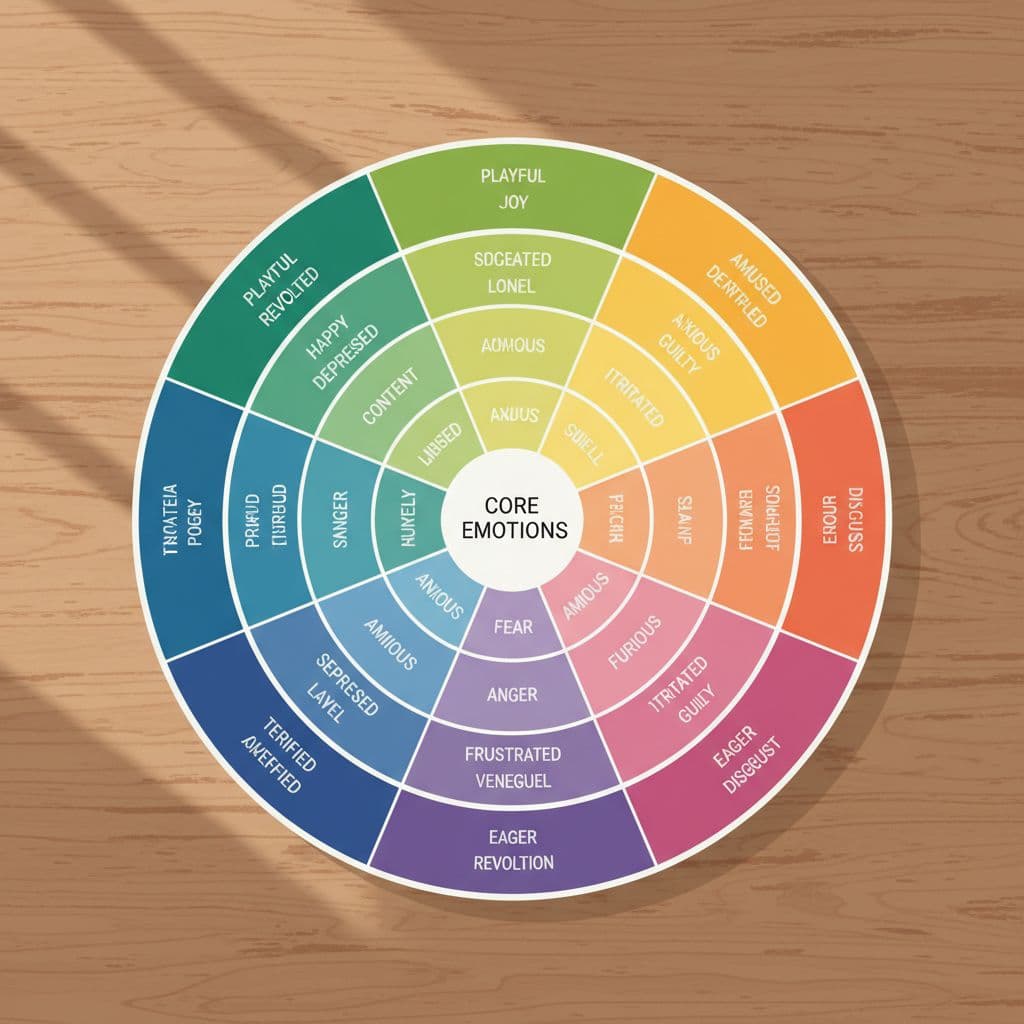
If “bad” is the only word you have, start there. Then look for a closer fit: hurt, ashamed, lonely, trapped, disappointed, scared, resentful, numb. A printable emotion wheel resource can make this easier, and Greater Good’s naming your emotions practice offers a gentle structure.
You can also journal in tiny doses. No essays. No pressure to sound wise.

A few prompts that often help:
- Right now, my body feels…
- If this feeling had a color or weather pattern, it would be…
- What happened right before I went numb?
- What do I need more of today, comfort, space, rest, reassurance, or distance?
Grounding can help too. Put both feet on the floor. Name five things you see. Hold something cold. Exhale longer than you inhale. When the nervous system settles even a little, emotions often become easier to notice.
Get support that doesn’t question your reality
Some feelings are hard to access alone, especially if being honest used to bring punishment. A trauma-informed therapist can help you notice patterns without rushing you or arguing with your experience. If you’re considering support, this guide to therapy after emotional abuse can help you think about what to look for.
This article is educational. It isn’t a substitute for therapy or crisis care. If you’re in immediate danger or worried about your safety, reach out to local emergency services or a crisis resource in your area right away.
Healing timelines vary. Some people reconnect with emotions quickly. Others need longer periods of safety before feelings become clearer. Both are normal.
Conclusion
Losing the ability to name your feelings after abuse is not a sign that you are cold, dramatic, or failing at healing. It often means your mind and body learned to protect you by muting, scrambling, or hiding emotional signals.
With safety, practice, and support, those signals can return. Recovery often begins with one quiet shift: believing that your inner experience counts, even before you can fully explain it.