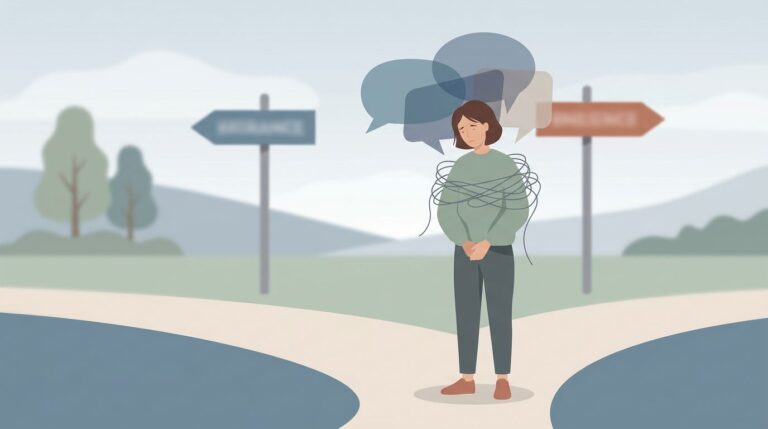
Silence can feel loud when your body hears it as rejection.
If spending time alone makes you anxious, heavy, restless, or oddly panicked, that doesn’t mean you’re doing solitude wrong. It often means your nervous system learned to treat disconnection like danger, especially after painful relationships or unpredictable closeness.
The good news is that alone time can be relearned. It doesn’t have to start with peace. It can start with safety.
Why being alone can feel like abandonment
A lot of people think, “I’m alone, so I should be fine.” But your body doesn’t always respond to logic. It responds to patterns.
If connection used to come with instability, mixed signals, or fear, quiet moments can wake up old alarm bells. After emotional abuse or relationship abuse, being by yourself can feel less like rest and more like the moment after someone pulls away. You may start scanning your phone, replaying conversations, or assuming you’ve been forgotten.
This is where attachment patterns come in. That’s a simple way of saying you learned what to expect from closeness. If love felt inconsistent, your system may have learned to cling, brace, or panic when no one is there. That isn’t a character flaw. It’s a survival habit.
This can happen after family wounds, breakups, or relationships shaped by control and confusion. If your history includes hot-and-cold affection, blame-shifting, or patterns tied to narcissism, it makes sense that being alone feels charged. For many survivors who are still recognizing relationship abuse, solitude can stir up doubt as much as sadness.
Being alone isn’t the same as being abandoned. One is a moment, the other is an old fear.
That difference matters. When you start naming the fear instead of obeying it, space opens up. Not huge space, maybe only a crack at first… but enough to choose a new response.
Change the story your mind tells in quiet moments
When abandonment fear hits, the mind gets dramatic fast. “No one wants me.” “I don’t matter.” “I’m going to feel like this all night.” Those thoughts can feel true because they are familiar, not because they are accurate.
A gentler way to respond is to separate the fact from the story. The fact might be, “I’m home alone tonight.” The story might be, “I’ve been left behind.” Once you see the story, you can soften it.
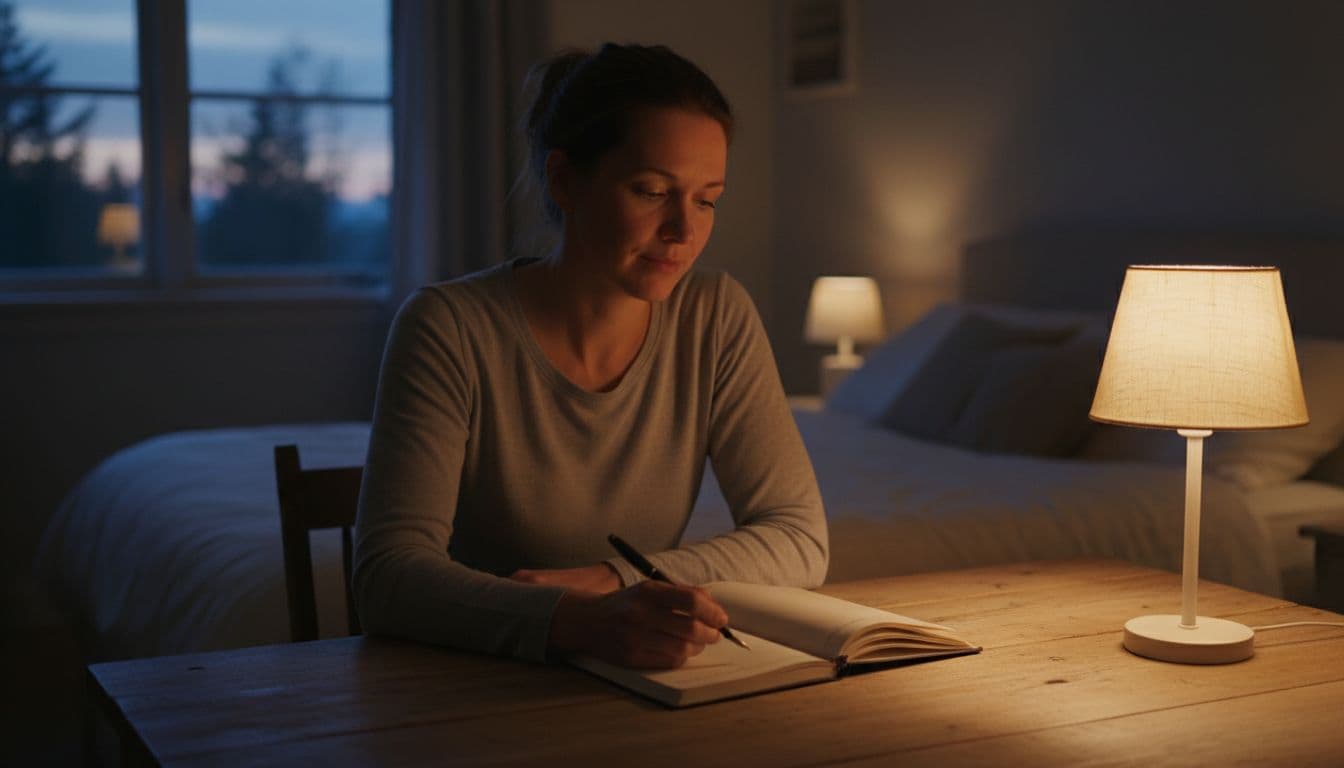
Try writing three short lines in a notebook:
- What happened?
- What am I telling myself it means?
- What else could be true?
That last question matters. Maybe the quiet means you’re safe. Maybe the empty room means no one is criticizing you. Maybe the ache is old grief surfacing, not proof that you’re unlovable.
Reframing works best when it’s believable. You don’t have to jump from “I feel abandoned” to “I love being alone.” That’s too far. Try a softer bridge instead: “I’m alone right now, and I’m still connected to people.” Or, “This feeling is real, but it isn’t the whole truth.”
If harsh thoughts show up in the voice of a past partner, parent, or someone who used emotional abuse to control you, name that too. Sometimes the pain of solitude is not solitude at all. It’s an echo.
Pick solo activities that feel light, not lonely
A common mistake is choosing solo activities that require too much energy. When you’re triggered, you don’t need an impressive hobby. You need something that gives your mind a place to rest.
Low-pressure activities work because they offer gentle structure. Your attention has somewhere to go, but you don’t have to perform. Think less “fix your life” and more “keep yourself company.”

A few good options:
- Read ten pages of something comforting, not something that feels like homework.
- Make tea, coffee, or toast and eat it without rushing.
- Sit in a park, library, or cafe where you’re alone but not isolated.
- Fold laundry while music or a familiar show plays in the background.
- Color, knit, sketch, do a puzzle, or repot a plant.
- Take a slow walk and notice five things you can see.
Notice the pattern here. These activities are simple, sensory, and easy to stop. That’s the point.
If meditation helps, great. If sitting in silence makes your chest tighten, skip it for now. There’s nothing wrong with choosing softer entry points. Recovery is not a contest in how calm you can look.
You also don’t have to “make the most” of every minute alone. Sometimes a good evening is one where you didn’t spiral. That’s still progress. That’s still relationship healing, because you’re learning that your own company doesn’t have to feel like punishment.
Make alone time predictable and easier on your body
When solitude feels unsafe, unpredictability makes it worse. A little routine can help your body stop treating every quiet evening like an emergency.
Pick one small block of time, maybe ten or fifteen minutes, and repeat it most days. Use the same chair. Turn on the same lamp. Put on the same playlist. Hold the same warm mug. These details may sound small, but they send a message: “I know what this is. I’ve been here before. I’m okay.”
You can also create an “entry” and “exit” ritual. At the start, place both feet on the floor and take one slow breath. At the end, check in with yourself: “How do I feel now compared to ten minutes ago?” This keeps alone time from feeling endless.

If your body starts to panic, come back to the senses. Feel the chair under you. Name three colors in the room. Wrap up in a blanket. Press a hand to your chest. Smell lotion, tea, or something clean and familiar. Gentle coping tools work best when they are easy enough to remember.
In recovery, small repetitions matter more than big promises. One calm walk alone. One meal you ate without scrolling for reassurance. One evening where you stayed present for twelve minutes instead of two. That’s how trust grows.
A lot of people expect a breakthrough. More often, spending time alone gets easier the way daylight arrives, slowly, then all at once.
Know when to ask for support
Needing support does not mean you’ve failed at being alone. It means your system is asking for more care than self-help can give in that moment.
Reach out sooner if being alone leads to any of these:
- Panic that doesn’t settle with grounding or time.
- Dissociation, numbness, or feeling unreal for long stretches.
- Urges to self-harm, contact someone unsafe, or do anything that puts you at risk.
If that sounds familiar, a therapist can help you work with attachment wounds, grief, and body-based fear responses. A trusted friend can help too. Support doesn’t have to be dramatic. It can be a simple text like, “I’m having a hard night. Could you stay on the phone with me for ten minutes?”
If your fear of solitude grew after emotional abuse, remember that healing isn’t linear. Many people find comfort in reading about the stages of emotional recovery because it helps them see that setbacks are part of the process, not proof that they’re stuck.
Sometimes the bravest move is not forcing yourself to endure one more lonely hour. Sometimes it’s letting someone safe stand beside you while you learn.
Final thoughts
Being alone and feeling abandoned are not the same thing. One is a situation. The other is an old alarm that can be softened, answered, and slowly retrained.
Start with safety, not perfection. A softer thought, a simpler activity, a shorter stretch of time, a little support when you need it. The goal isn’t to need no one. It’s to learn that when the room gets quiet, you can still stay with yourself.