
If you feel stuck in an on-and-off toxic relationship, you’re not alone. One day it feels like you’ve found “your person,” and the next day you’re anxious, apologizing, or trying to earn basic kindness back.
That confusion is often the hardest part. A trauma bond can feel like true love because it’s intense, consuming, and full of relief after pain, especially when attachment styles make those dynamics so familiar. Real love can feel quieter, and that can be unsettling when your nervous system is used to chaos.
This guide gives you a clear, non-judgmental checklist, plus next steps that protect your safety and choices.
Why a trauma bond can feel like love (even when it hurts)
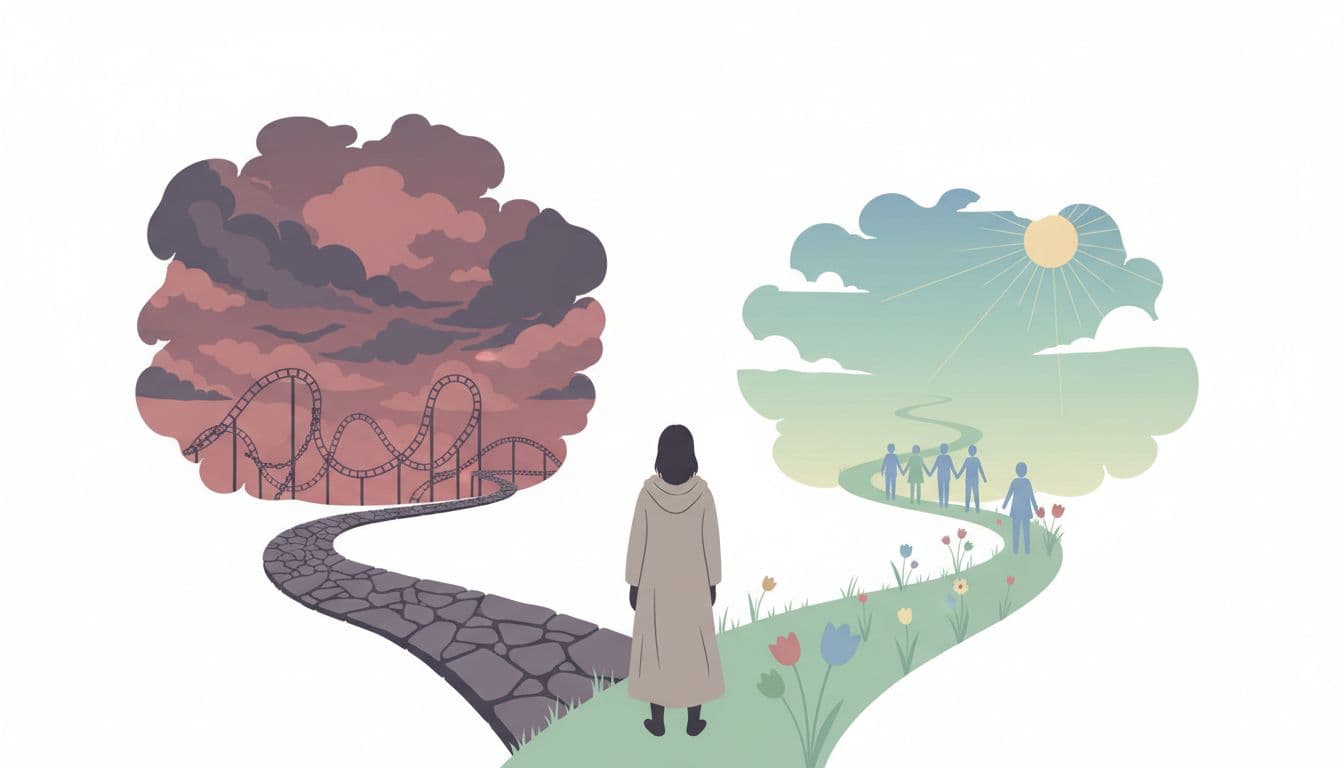
A trauma bond forms when relationship abuse is mixed with moments of warmth, attention, or remorse. Your brain starts linking relief to the person who caused the pain through intermittent reinforcement and intermittent positive reinforcement. It’s like being thirsty and only getting water after you beg for it. The water feels life-saving, but the system is still cruel.
Many people describe it as “addictive.” That’s not a character flaw. It’s a pattern built on uncertainty, fear, and short bursts of reward that hijack dopamine pathways. When affection is unpredictable, your body enters survival mode and stays on alert. When the nice version of them returns, your body crashes into relief. That relief can feel like love, even if it’s really your nervous system coming down from stress. This dynamic shares parallels with Stockholm Syndrome.
Trauma bonds often follow the cycle of abuse: tension, blow-up, apology or gifts, then a “honeymoon” phase. The calm doesn’t last, so you keep chasing it. Over time, emotional abuse can rewrite your sense of what’s normal. You might start thinking, “If I just explain it better, they’ll get it,” or “They act like this because they’re wounded.”
Sometimes this dynamic overlaps with narcissism, especially narcissistic abuse in a toxic relationship that relies on emotional manipulation like gaslighting, control, image, and punishment for boundaries. Not every harmful partner is a narcissist, but if you’re always managing their ego and paying for their moods, that’s a red flag. For a grounded explanation of why trauma bonds feel sticky, see The Hotline’s overview of trauma bonds.
Trauma bond vs healthy relationship: the quick “body and behavior” checklist
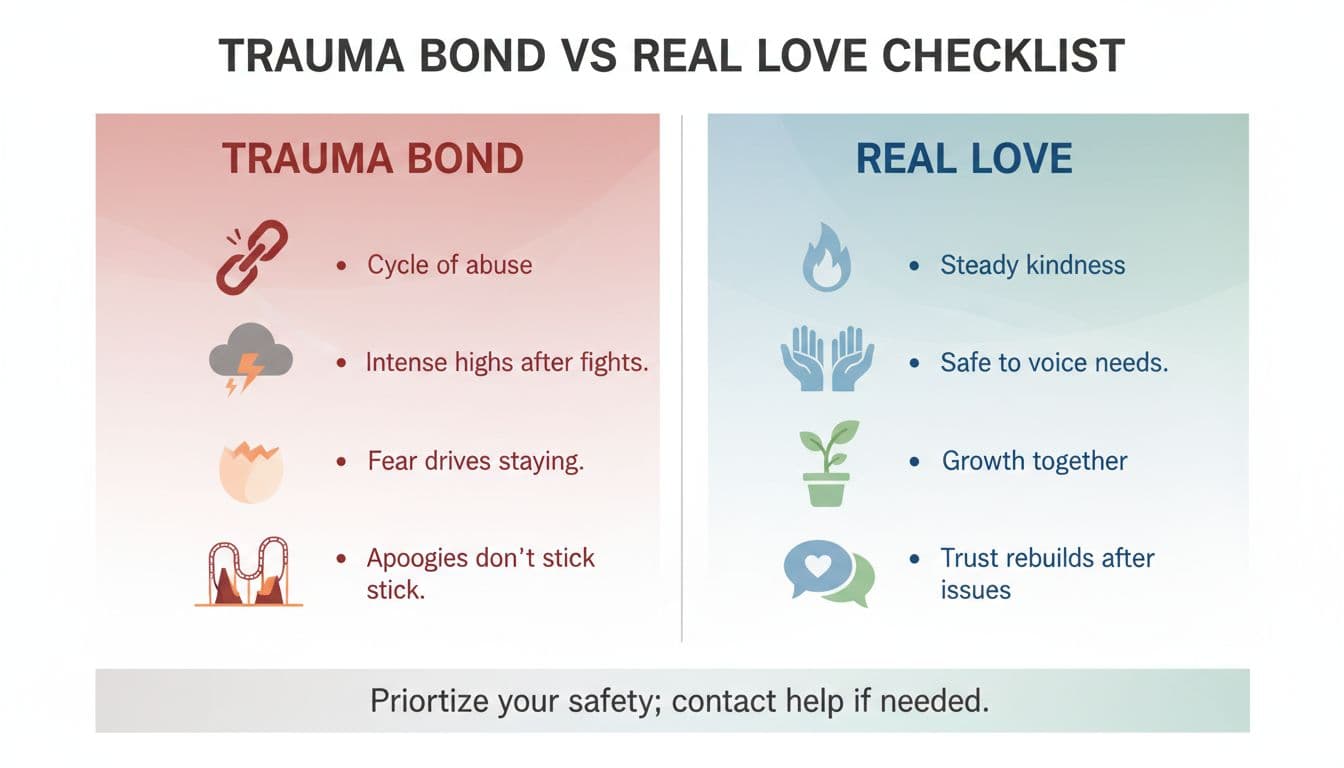
A healthy relationship provides emotional safety and mutual respect. It doesn’t need you to shrink. It doesn’t punish you for having needs. It may have conflict, but it has repair that lasts.
Use the table first, then the printable checklist. You’re not trying to “prove” anything. You’re trying to see your reality clearly.
A simple comparison table
| What it feels like | More like a trauma bond | More like a healthy relationship |
|---|---|---|
| Your nervous system | Constant anxiety, relief after fights | Mostly calm, authentic connection |
| Conflict | Explosions, blame, fear of consequences | Disagreements, respect, problem-solving |
| Personal boundaries | Punished, mocked, ignored | Heard, negotiated, honored |
| Apologies | Dramatic, short-lived, no change | Specific, followed by consistent change |
| Power | One person dominates, controls, or tests | Shared power, mutual care |
Printable checklist (mark what’s true most of the time)
- I feel “high” after they’re kind again, especially after they hurt me.
- I stay because I’m scared of losing them, not because I feel safe with them.
- I often feel I’m walking on eggshells.
- I apologize more than they do, even when I didn’t cause the issue.
- My boundaries lead to anger, silent treatment, guilt, or threats.
- The relationship has intense lows, then intense make-ups from love bombing that feel magical.
- I’m more isolated than I used to be (from friends, family, or myself).
- I doubt my memory or judgment after conflict.
- I feel responsible for their feelings, reactions, or setbacks.
- I’ve changed my behavior to avoid being punished or abandoned.
- When things are calm, I feel uneasy, like I’m waiting for the next hit.
- I can picture a future where I keep “enduring,” not growing.
If you checked several boxes, you may be dealing with a trauma bond, which differs from true love, or another form of emotional abuse or relationship abuse. For another set of warning signs, this Psychology Today piece on trauma bond signs may help you put language to what you’re seeing.
If it’s a trauma bond, what now? Safer next steps for recovery
First, focus on safety, not labels. You don’t have to convince your partner, your family, or even yourself overnight. You can take one stabilizing step at a time to break free and find recovery.
If you’re in immediate danger, call local emergency services. If you’re not in immediate danger but you feel trapped or monitored, consider reaching out for confidential support. A trauma bond can loosen when you have steady outside voices reminding you what’s real.
Here are practical steps that support recovery and relationship healing, without pushing you into risky moves:
Name the pattern on paper. Write a short timeline of the last 3 big conflicts: what happened, what was said, what changed (if anything). These conflicts often trigger the fight-or-flight response. Trauma bonds thrive on fog. Notes bring clarity.
Build a “reality team.” Choose one safe person to check in with. If you don’t have one, a therapist or advocate can fill that role, especially when codependency clouds your perspective. If you live with bipolar swings, depression, or guilt spirals, that extra support matters. This post on navigating depression and guilt after emotional abuse can help you separate pain from self-blame.
Shrink contact in ways that don’t raise risk. If reducing contact could provoke retaliation, get help planning first. An advocate can talk you through options that fit your situation.
Practice one boundary you can keep. Not a boundary that changes them, a boundary that protects you. Examples: “I won’t discuss this while being yelled at,” or “I’ll leave the room if insults start.” Establishing personal boundaries like these fosters open communication in a healthy relationship. If they punish the boundary, that’s information.
Get support that’s trauma-informed. Trauma-informed therapy can help with attachment wounds, self-trust, and the grief that comes with letting go. Recovery involves moving toward a secure attachment style. You’re not just leaving a person, you’re leaving a chemical rush of hope and relief.
Quick safety note about browsing
If you worry someone checks your phone or computer, consider using a safer device (like a trusted friend’s) or a private browsing window. Only clear history or messages if it won’t put you at more risk.
For more education and coping tools, you may also find HelpGuide’s trauma bonding explanation supportive and easy to read.
A calmer kind of love is possible
A trauma bond can feel like oxygen, especially after years of chaos in a toxic relationship. True love feels more like steady ground, an authentic connection where you can breathe, you can think, you can be yourself.
You don’t have to earn safety. You don’t have to prove your pain is “bad enough.” If your checklist points toward harm, break free by choosing support as a strong first step; it counts as recovery even before anything else changes.


