That moment when you realize you might’ve twisted someone’s reality can feel like a stomach drop. You replay the conversation, you hear your own tone, and a new thought lands hard: “I’m the Problem”, exposing an abusive mindset as a pattern to unlearn.
If you’re here, you’re not asking for a pass. You’re asking for a way to get honest without spiraling into shame, and to do something different next time. This post gives you a practical, 10-minute reality-check routine to reality-check your story, take accountability, and plan repair.
This is about behavior, impact, and choice, not labels, not self-hate, and not “winning” the argument.
What “I’m the problem” actually means (and what it doesn’t)
Gaslighting, a form of manipulation often associated with toxic people, shows up as denying, minimizing, rewriting events into a false narrative, or turning someone’s feelings into “proof” they’re irrational. It can be intentional, or it can happen in stress, defensiveness, or fear. Either way, the impact can be real, eroding their self-worth especially if it becomes a pattern.
A helpful reality-check is to ask: did I resort to covert abuse to make them doubt their memory, perception, or feelings so I wouldn’t have to sit with discomfort and shift the blame? That’s different from having a different viewpoint.
Not every conflict equals emotional abuse or relationship abuse, and it’s not useful to slap a label on yourself in a panic. Patterns matter. Power matters. If your “version of events” consistently requires the other person to be “crazy,” “too sensitive,” or “making it up,” that’s a red flag worth addressing.
If you want a clear, plain-language definition, Psychology Today’s overview of what gaslighting is can help you sanity-check the behavior without turning it into a courtroom drama.
One more key point: accountability isn’t “I’m awful.” Accountability is “I did harm, I can face it, and I can change.”
The 10-minute reality-check routine (minute by minute)
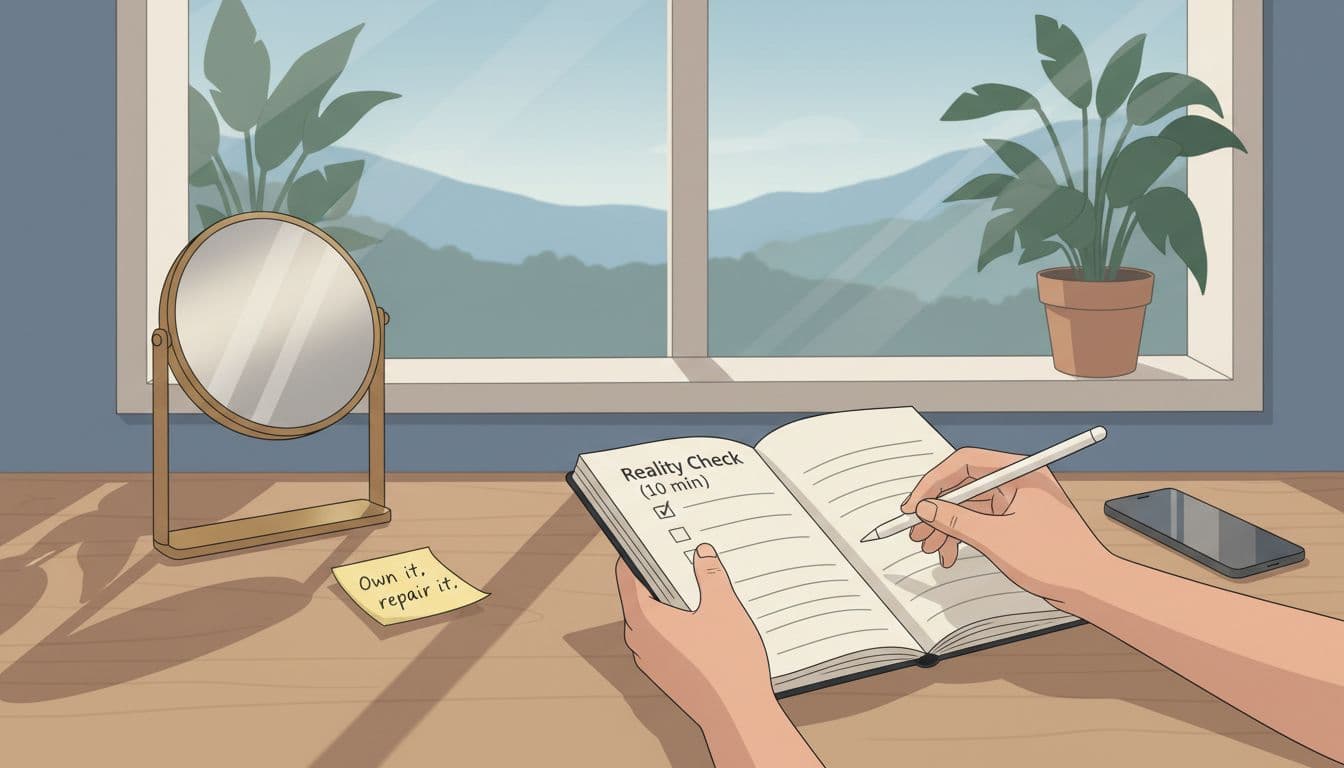
This routine is built for reactive defense in the real world, when your nervous system is loud, triggering a trauma response such as fight, freeze, flight, or fawn that impacts cognitive function and makes your brain want to defend you. It supports self-regulation to shift you into grounded awareness.
Before you start: put your phone face-down, set a 10-minute timer, and commit to no texting until you’re done.
| Minute | Prompt (say it out loud if you can) | Aim |
|---|---|---|
| 0:00-1:00 | “I’m going to tell the truth, not win.” Take 5 slow breaths. | Shift from fight mode to grounded mode |
| 1:00-2:00 | Write one sentence: “What are they saying happened?” | Separate their claim from your rebuttal |
| 2:00-3:00 | Write one sentence: “What do I say happened?” | Name your story without polishing it |
| 3:00-4:00 | Circle any of these you used: deny, mock, minimize, change subject, blame their feelings. | Spot tactics, not character flaws |
| 4:00-5:00 | “If a camera recorded this, what would it show?” List 2-3 facts. | Anchor in observable reality |
| 5:00-6:00 | “What might they have felt in that moment?” Pick 2 feelings. | Practice basic empathy |
| 6:00-7:00 | “What was I protecting?” (ego, fear, shame, power and control, image). | Find the driver behind the behavior |
| 7:00-8:00 | “What did my words ask them to doubt?” (memory, intention, self-doubt, emotions). | Name the specific harm |
| 8:00-9:00 | Choose one repair action: apologize, clarify, set a boundary, pause and revisit. | Move from insight to action |
| 9:00-10:00 | Draft one sentence you can say that includes impact + responsibility. | Prepare to repair without arguing |
When the timer ends, pick your next step based on safety and timing:
- If you’re still flooded, take a longer break (walk, shower, snack), then return.
- If the relationship is tense, ask for a time to talk instead of forcing it now.
- If you notice repeated patterns, plan structured support (therapy, coaching, skills group) as part of recovery, not as punishment.
Accountability and repair: phrases that reduce harm
A repair attempt can fail if it’s packed with defenses, which risks provoking reactive abuse from the hurt party. Keep it simple, specific, and focused on impact.
Sample phrases that show real responsibility
Use your own voice, but keep the bones:
- “I denied your experience, and that was hurtful. I’m sorry.”
- “I told you you were overreacting. That wasn’t fair, and I want to do better.”
- “I’m realizing I pushed my version so hard that you started doubting yourself.”
- “I don’t need you to agree with me for your feelings to be real.”
- “If I’m confused, I can ask questions, not rewrite what you remember.”
- “I’m going to take a pause when I feel defensive so I don’t repeat this.”
If you want a practical framework for noticing thoughts and changing reactions, the APA’s handout on what CBT is can be useful, especially for catching “I must be right” thinking before it turns into harm or reactive abuse.
Do and don’t for repair (without groveling)
Do:
- Name the behavior (what you did), not your identity.
- Validate the impact: “That makes sense you felt hurt.”
- Ask what would help: “Do you want space, or a short talk?”
Don’t:
- Demand forgiveness, closure, or reassurance.
- Let toxic people use therapy words as weapons (“You’re triggered,” “You’re projecting”).
- Slip into “I’m the worst,” which quietly asks them to comfort you.
Repair is part of relationship healing in interpersonal relationships, but it also includes boundaries and helps distinguish single-sided harm from mutual abuse in high-conflict cycles. If the other person doesn’t want to engage, respect that.
Journaling worksheet + when it’s time to get extra support
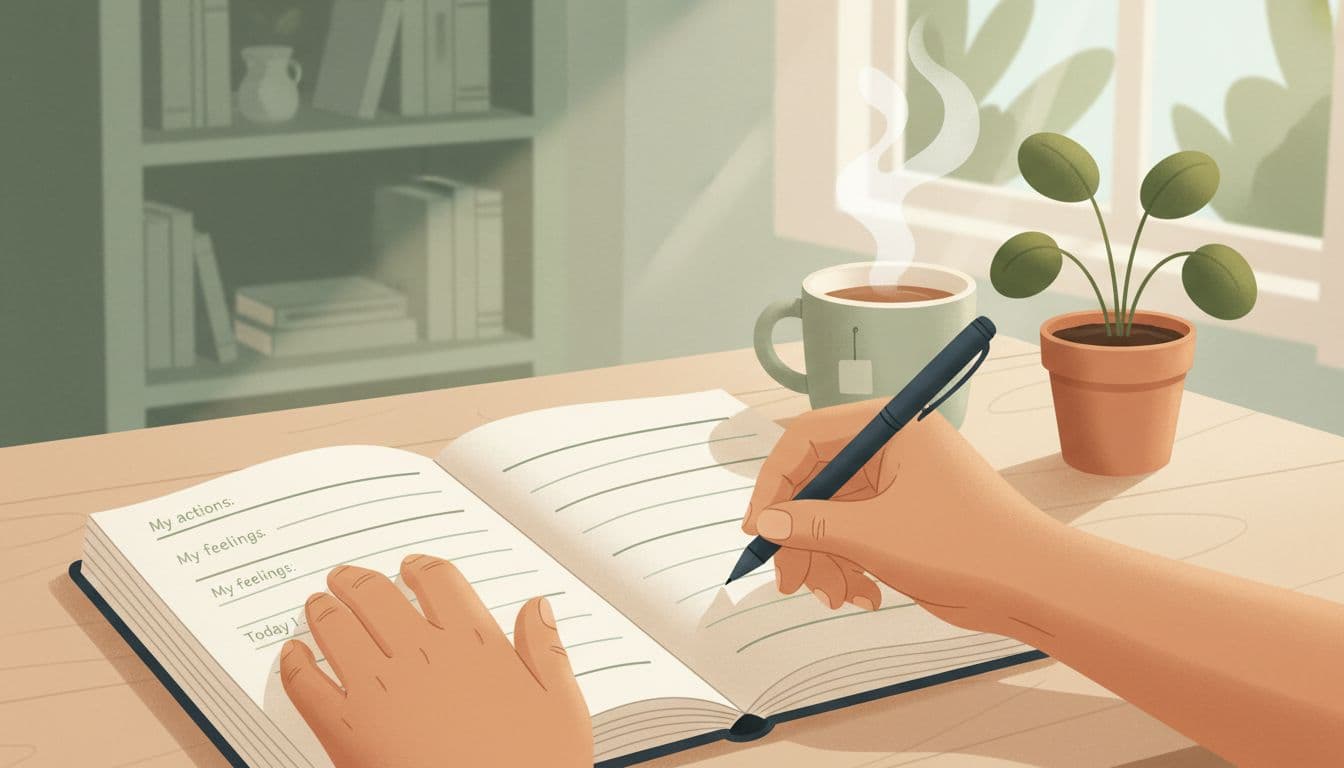
A one-page “reality check” you can reuse
Try copying this into your notes app or journal:
1) What happened (facts only):
I said/did: ________
They said/did: ________
2) Where I crossed a line:
I denied/minimized/rewrote: ________
3) The likely impact on them:
It may have made them feel: ________
4) What I was protecting:
I was trying to avoid: ________
5) My repair plan (one action):
Within 24 hours, I will: ________
If shame is eating you alive and stirring up complex PTSD symptoms alongside guilt and mood struggles, it can help to read something grounded. This post on Living Numb about navigating depression and guilt in bipolar disorder speaks to that heavy “I ruined everything” feeling without making it your whole identity, and it touches on complex PTSD recovery paths.
When it’s more than a slip
If gaslighting is part of a bigger pattern of control, intimidation, or isolation, it can slide into an abusive relationship or domestic violence. That’s a “stop and get help” moment, not a “try a better apology” moment. APA’s page on intimate partner violence lays out risks and options clearly for those facing domestic violence or an abusive relationship.
You might also see people online bring up narcissism or narcissistic abuse when gaslighting is mentioned. Avoid diagnosing yourself or anyone else. Focus on what you can change: honesty, empathy, consent, boundaries, and distinguishing self-defense from reactive abuse. If you keep returning to the same harmful cycle, perhaps involving reactive abuse and reaching a breaking point, professional support can speed up recovery and reduce harm from narcissistic abuse.
If there’s any sexual violence in the picture, or you need confidential support right now, RAINN’s support options can help you find next steps.
Educational note: This article is for education, not therapy. If anyone is in immediate danger or at risk of harm, contact local emergency services or a local crisis line.
Conclusion
Owning “I’m the problem” doesn’t mean you’re beyond hope. It means you’re finally facing the part you can control. Embracing accountability isn’t about abandoning self-defense or losing your right to safety, but about halting harm from an abusive mindset. Small, honest actions help you break free from the patterns of toxic people, fostering long-term change and rebuilding trust while steering clear of reactive abuse.
Try the 10-minute routine once, then try it again the next time you feel defensive and tempted by self-defense that echoes toxic people. Gaslighting accountability is a practice, not a personality. The question isn’t “Am I a bad person?” It’s “What will I do differently today to promote real relationship healing and sidestep reactive abuse?”