Have you ever tried to explain how you feel, and the other person shrugs it off like it’s nothing? After a while, something shifts. Words don’t come, your chest tightens, and you feel far away, even if you’re sitting right there.
That’s emotional shutdown. It’s not a character flaw. It’s often a protective response to chronic invalidation, especially in close relationships where you’re supposed to feel safe.
This article explains why shutdown happens, how it connects to emotional abuse patterns, and what helps you come back online, without blaming yourself.
What emotional shutdown looks like (and what it isn’t)
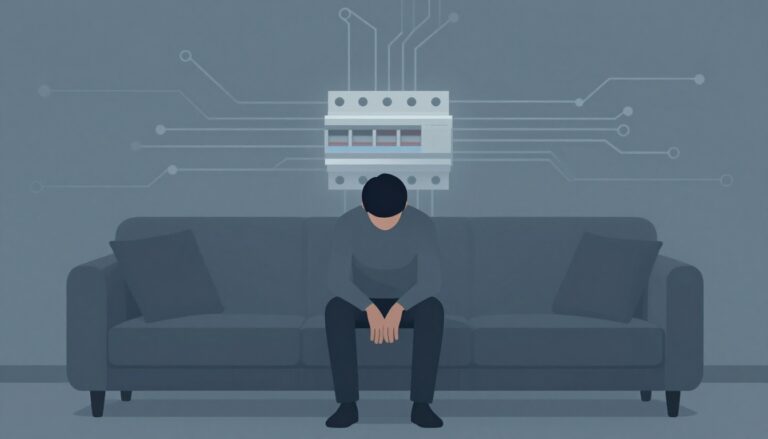
Emotional shutdown can be quiet and hard to spot from the outside. Inside, it can feel like a fuse blew.
Common signs include:
- Going blank, struggling to find words
- Feeling numb, detached, or “robotic”
- Wanting to leave the room, end the call, or sleep
- Nodding along to stop conflict, even if you disagree
- Feeling shame afterward, like you “failed” at communication
A brief vignette: Jordan tries to talk about feeling hurt. Their partner replies, “You’re overreacting.” Jordan’s throat tightens. Ten seconds later, Jordan can’t remember what they were going to say. They stare at the floor and think, Just get through this.
Shutdown isn’t the same as being cold, manipulative, or uncaring. Many people shut down precisely because they care, and they don’t want things to escalate.
For a simple explanation of why people shut down when emotions get too big, this piece from UnityPoint is helpful: A therapist explains why we shut down when flooded with big emotions.
How chronic invalidation trains your system to go offline
Invalidation is any response that dismisses, minimizes, or rewrites your feelings. It can sound like:
- “You’re too sensitive.”
- “That didn’t happen.”
- “It’s not a big deal.”
- “You always make everything about you.”
When invalidation happens over and over, your nervous system learns a harsh lesson: sharing feelings leads to pain. Over time, your body may choose the fastest exit it has, which is to shut down.
Think of it like a phone switching to low power mode. It’s not broken. It’s trying to conserve energy and reduce damage.
Chronic invalidation can show up in families, friendships, workplaces, and romantic relationships. It can also happen to people living with mood disorders, trauma histories, or high stress, but you don’t need a diagnosis for shutdown to be real.
When shutdown is tied to emotional abuse and relationship abuse
Sometimes invalidation is clumsy, the person doesn’t know how to respond. Other times, it’s part of emotional abuse or relationship abuse, where one person gains power by making the other feel “wrong” for having feelings.
Patterns that can push shutdown harder include:
Blame and ridicule: Your feelings get mocked or treated as a weakness.
Gaslighting: Your reality gets questioned until you doubt yourself.
Control: You’re punished (silence, threats, rage) for expressing needs.
Cycles of charm then dismissal: Warmth returns only when you stop asking for care.
You may also notice shutdown in relationships shaped by narcissism (not as a label to throw around, but as a pattern where empathy is inconsistent and your needs are treated as inconveniences).
The American Psychological Association has written about the harms of psychological abuse, including how damaging it can be over time: Childhood psychological abuse as harmful as sexual or physical abuse.
If you’re trying to “communicate better” but the other person keeps denying your experience, the issue may not be your communication. It may be the environment.
The hidden costs of staying numb
Shutdown can protect you in the moment, but it can also shrink your life.
- In your body: headaches, fatigue, gut issues, sleep problems
- In your mind: brain fog, low mood, self-doubt
- In connection: less honesty, less desire, more distance
Many readers here recognize that mix of heaviness and self-blame. If you’re also carrying depression and guilt, you might relate to this Living Numb post on depression and guilt in bipolar disorder, especially the way guilt can deepen withdrawal.
The goal isn’t to shame shutdown. The goal is to widen your options.
Practical tools for coming back from emotional shutdown
These tools are small on purpose. When you’re shut down, big advice can feel impossible.
Grounding: help your body feel “here” again
- Press both feet into the floor and name 5 things you see.
- Hold something cool (a glass of water, a cold pack) for 30 seconds.
- Breathe out longer than you breathe in, like a slow sigh.
You’re not trying to “calm down perfectly.” You’re signaling safety.
Emotion labeling: give the feeling a simple name
Shutdown often blocks words. Start tiny:
- “I’m overwhelmed.”
- “I feel cornered.”
- “I’m hurt and I’m shutting down.”
Even one accurate label can reduce the swirl.
Time-outs with a reconnection plan (not a disappearance)
A time-out works best when it’s clear and temporary.
Try: “I’m starting to shut down. I need 20 minutes to reset. I will come back at 7:30 and we can try again.”
If you’re the partner, try: “Okay. I’m here when you come back. Do you want quiet or a check-in text?”
This is how you protect the relationship without forcing your nervous system to sprint.
Boundary-setting when invalidation keeps happening
Boundaries don’t control the other person. They protect your limits.
- “I’ll talk about this, but not if I’m being called names.”
- “If my feelings get dismissed, I’m going to pause the conversation.”
- “I’m not debating what I experienced.”
Boundaries are especially important in relationship healing, because they create basic emotional safety.
Validation phrases that reduce shutdown fast
Validation doesn’t mean agreement. It means acknowledging impact.
- “That makes sense.”
- “I can see why that hurt.”
- “I don’t want to argue your feelings.”
- “Tell me what you needed in that moment.”
If you’re the one who shut down, self-validation also helps: “This is hard. My body is protecting me. I can take one small step.”
A step-by-step repair conversation template (after shutdown)
Repair is where recovery grows. Not because you never shut down, but because you learn how to return.
- Name what happened: “I shut down during that talk.”
- Own your part without self-attack: “I didn’t respond, and I know that felt lonely.”
- Share the internal experience: “My mind went blank and I felt unsafe.”
- State the need: “I need slower pacing and fewer accusations.”
- Offer a specific next time plan: “If I freeze, I’ll ask for a 20-minute break and come back.”
- Invite their side: “What was that like for you, and what would help?”
A quick example: Sam says, “When you said ‘Here we go again,’ I shut down.” Their partner replies, “I didn’t realize. I was frustrated.” Sam adds, “I need you to say you’re frustrated without labeling me. I’ll take a short break instead of disappearing.”
Myth vs fact: shutdown and what it really means
| Myth | Fact |
|---|---|
| “Shutdown means they don’t care.” | Shutdown often means they care, but feel overwhelmed or unsafe. |
| “If they loved me, they’d just talk.” | Love doesn’t override a threat response. Skills and safety matter. |
| “They’re doing it on purpose.” | Many people shut down automatically, then feel ashamed afterward. |
When extra support is a good idea
This is educational content, not medical advice. If shutdown is frequent, connected to trauma, or happening in the context of emotional abuse, support can help. Many people benefit from trauma-informed therapy, couples counseling (when it’s safe), or skills-based approaches.
If you ever want crisis resources in a general, just-in-case way, SAMHSA’s 988 Suicide & Crisis Lifeline is a starting point in the US, and SAMHSA also lists other options on its helplines page. If you live outside the US, your local health service may offer similar numbers (for example, NHS services in the UK).
Conclusion
Emotional shutdown isn’t proof you’re broken. It’s often proof you adapted to not being heard.
When you add grounding, clear time-outs, and repair, you give your nervous system a new option: connection that doesn’t cost you your dignity. If chronic invalidation has shaped your relationships, you still deserve relationship healing that feels safe, steady, and real.