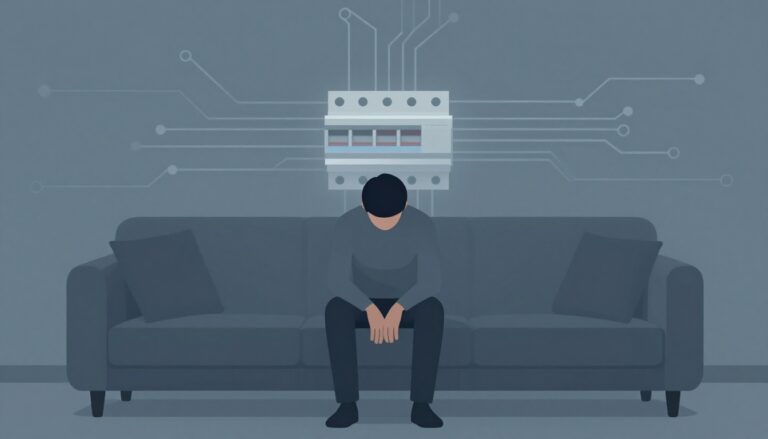
Feeling anxious before partner gets home can start with what you expect when they’re coming home: conflict, criticism, or a sudden end to time alone. Past experiences can make an ordinary arrival feel threatening, even when your current partner is respectful.
That tension is information worth noticing, but it doesn’t establish whether your relationship is unsafe. You can love someone and still feel protective of the peace you experience alone. Start by looking at what you expect to happen when they walk through the door.
Key Takeaways
- Mixed feelings about a partner’s return can reflect a need for solitude, predictability, or unresolved repair.
- Repeated control, intimidation, and punishment deserve attention beyond ordinary anxiety management.
- Breathing exercises may ease immediate distress, while lasting relief depends on addressing the pattern behind it.
Why You Feel Anxious Before Your Partner Gets Home
The timing of your anxiety offers a useful clue. Notice whether it rises around their arrival, unexpected delays, or particular unresolved subjects.
You may be anticipating a familiar reaction
If homecomings regularly involve criticism, demands, or arguments, you may start preparing before anything happens. You might rush to clean, rehearse explanations, or monitor the clock.
This heightened watchfulness is sometimes called hypervigilance. It can also persist after past harm. Our guidance on emotional safety after abuse explores why a respectful current partner may still feel unfamiliar.
Your reaction deserves care either way. However, distinguishing remembered danger from current behavior helps identify what kind of support you need.
You may need a gentler transition
Time alone allows you to follow your own pace. A partner’s return changes the noise level, shared responsibilities, and expectations for attention.
After weeks apart, you may feel happy about your partner coming back while worrying about losing that freedom. This doesn’t make your affection dishonest.
Notice whether you can express your needs safely. A request for some transition time is different from feeling you must hide your preferences to avoid anger.
A Homecoming Can Carry Several Unresolved Problems
One anonymous Reddit post illustrates how reunion anxiety can involve several pressures at once.
The concerns extended beyond missing someone
A woman described her husband coming back after about a month visiting family following earthquakes and serious parental health problems. Her husband hadn’t seen his parents in five years. She looked forward to being together but feared losing her peace.
She described herself as a loner receiving treatment for psychotic disorders. She feared he had married her for immigration papers and said the suspicion made her feel paranoid. The post doesn’t establish whether it was accurate or indicate a diagnosis.
He sometimes said he’d be back by 3pm but arrived late. She described intense distress and repeatedly gave him an ultimatum. She had also stopped going out at his request, while acknowledging that this conveniently helped her avoid social time.
Money added strain: she supported them both through work as a dominatrix, and what he said he’d do about signing up for a job after returning had become another argument.
The replies left important questions open
One commenter asked whether he was abusive or toxic and encouraged her to consider her own feelings before weighing his commitments. She replied that she considered herself more abusive, describing hundreds of calls and many text messages when he was late.
Another commenter, identifying as an introvert, advised against forcing a partner into uncomfortable activities. Several replies returned to whether she felt happy.
The forum’s rules excluded advice on medical conditions, mental illness, legal and financial problems, and abuse. Those limits matter: a short account can’t establish the full context or replace appropriate support.
Tell Relationship Conflict Apart From Emotional Abuse
Anxiety alone doesn’t identify the cause. Look at what happens when you disagree, ask for space, or make independent choices.
Differences leave room for freedom
Partners can have incompatible preferences about socializing, money, or time together. Those differences can cause distress without involving abuse.
When partners respond respectfully to disagreement, both can question agreements and decline requests. Someone may feel disappointed, but they don’t use fear or punishment to force compliance. Repair includes acknowledging harm and changing behavior.
Happiness matters, but so does freedom. Consider whether you can remain yourself, maintain friendships, and raise concerns without paying an emotional price.
Control makes your choices smaller
Emotional abuse involves a pattern of humiliation, intimidation, manipulation, or control. Warning signs include monitoring your movements, restricting support, threatening abandonment, or punishing a refusal.
Our guide to distinguishing conflict from emotional abuse offers more everyday examples.
Labels such as narcissism can’t replace examining behavior. Also, mental health struggles, trauma, and stress don’t excuse coercion. Anxiety and missed commitments don’t justify harassment or surveillance by either partner.
If saying no has previously brought threats or retaliation, you don’t need another confrontation to justify seeking support.
A confidential advocate can help with personal safety planning without requiring you to confront your partner.
What to Do Before Your Partner Arrives
If you’re safe but feeling tense, start with the immediate distress. If you feel like you might freak out, pause, plant your feet, and take a few comfortable breaths. You don’t have to settle every relationship question before the door opens.
- Name the expectation behind the feeling. Finish the sentence, “When they get home, I’m expecting…” Be concrete about whether you anticipate criticism, interrupted rest, or an unresolved conversation.
- Use comfortable, unforced breathing. The NHS breathing exercise for stress recommends letting your breath move comfortably into your belly, breathing through your nose and out through your mouth.
- Identify one need you can express safely. You might need a calmer greeting, time to finish an activity, or a later conversation about money.
These steps can help you understand what you’re experiencing. Calming yourself doesn’t resolve repeated mistreatment. If your distress comes from predictable threats or humiliation, safety-focused support matters more than becoming better at tolerating the homecoming.
Notice what happens afterward. Does tension ease once you reconnect, or does the behavior you feared actually occur? That distinction helps separate anxious predictions from recurring experiences.
Handle Broken Promises Without Trying to Control Someone
You can’t make a partner follow through. You can ask for clear agreements, observe their actions, and decide what you’ll participate in.
Agree on schedules and social freedom
A promised 3pm arrival creates an expectation. Repeated lateness without communication can undermine trust, especially when childcare or shared plans depend on it.
When conversation is safe, agree on realistic timing and how to communicate delays. Explain the practical impact rather than demanding constant proof of their whereabouts.
Both partners should retain friendships and family connections, and each should have the freedom to go out. Negotiating responsibilities is reasonable; banning outings or requiring continuous updates can become controlling. Our boundary communication scripts offer language for stating limits without a prolonged argument.
Discuss work and money in concrete terms
When one person carries household costs, vague employment promises can create resentment and insecurity. Discuss the agreed contribution, a realistic timeline, and what expenses the household can support.
A boundary describes your own financial decisions. It doesn’t involve withholding necessities or using money to control another person’s freedom.
Then pay attention to follow-through. Job-search difficulties call for an honest discussion and a workable plan. Repeated excuses without action leave the original problem unresolved. Healing requires accountability and consistent change, not increasingly forceful reminders.
When Outside Support Is the Safer Next Step
Seek individual mental health support if anxiety regularly disrupts sleep, work, or daily life. You don’t need to prove abuse before asking for help.
If you’re receiving treatment for psychotic disorders, contact your clinician about new or worsening symptoms, including troubling suspicious thoughts. The National Institute of Mental Health’s psychosis guidance explains symptoms and treatment. A mental health diagnosis doesn’t invalidate concerns about a partner’s behavior; both deserve careful attention.
Couples counseling may help with shared communication problems when both people can speak freely. However, coercion or fear can make joint sessions unsafe. Confidential individual support or a domestic violence advocate is a safer starting point.
For relationship abuse support in the United States, the National Domestic Violence Hotline provides free, confidential help around the clock. Call 800-799-7233 or text START to 88788. Use a safer device if yours may be monitored.
If you’re in immediate danger, contact local emergency services. You don’t have to wait for physical violence before seeking safety-focused help.
Frequently Asked Questions
Is it normal to feel happy and anxious when my partner returns?
Yes, those feelings can coexist, especially after several weeks apart. You may miss your partner while valuing the routine you developed alone.
The important distinction is what the anxiety concerns. Adjusting to shared space calls for a different response than anticipating humiliation, pressure, or punishment.
Why do I get anxious when my partner travels?
Separation can bring loneliness, uncertainty, or fear about where things stand. Broken agreements may also make absence harder. That feeling alone doesn’t establish a disorder or an unsafe dynamic.
Maintain contact with supportive people rather than making your partner your only source of connection. If anxiety drives repeated checking or demands that they stop traveling, professional support can help you address the distress without restricting their freedom.
Listen to the Feeling Without Rushing the Verdict
Feeling anxious before your partner gets home deserves attention. Look at both your needs and the behavior you encounter when you express them.
Recovery can begin with taking your observations seriously and seeking support that respects your choices. You deserve safety and room to be yourself, including when someone you love walks through the door.